ADHD All or Nothing Thinking: Why Your Brain Keeps Spiraling
Stuck in ADHD all or nothing thinking? Here's the messy-brain toolkit that actually works when your prefrontal cortex has left the chat.

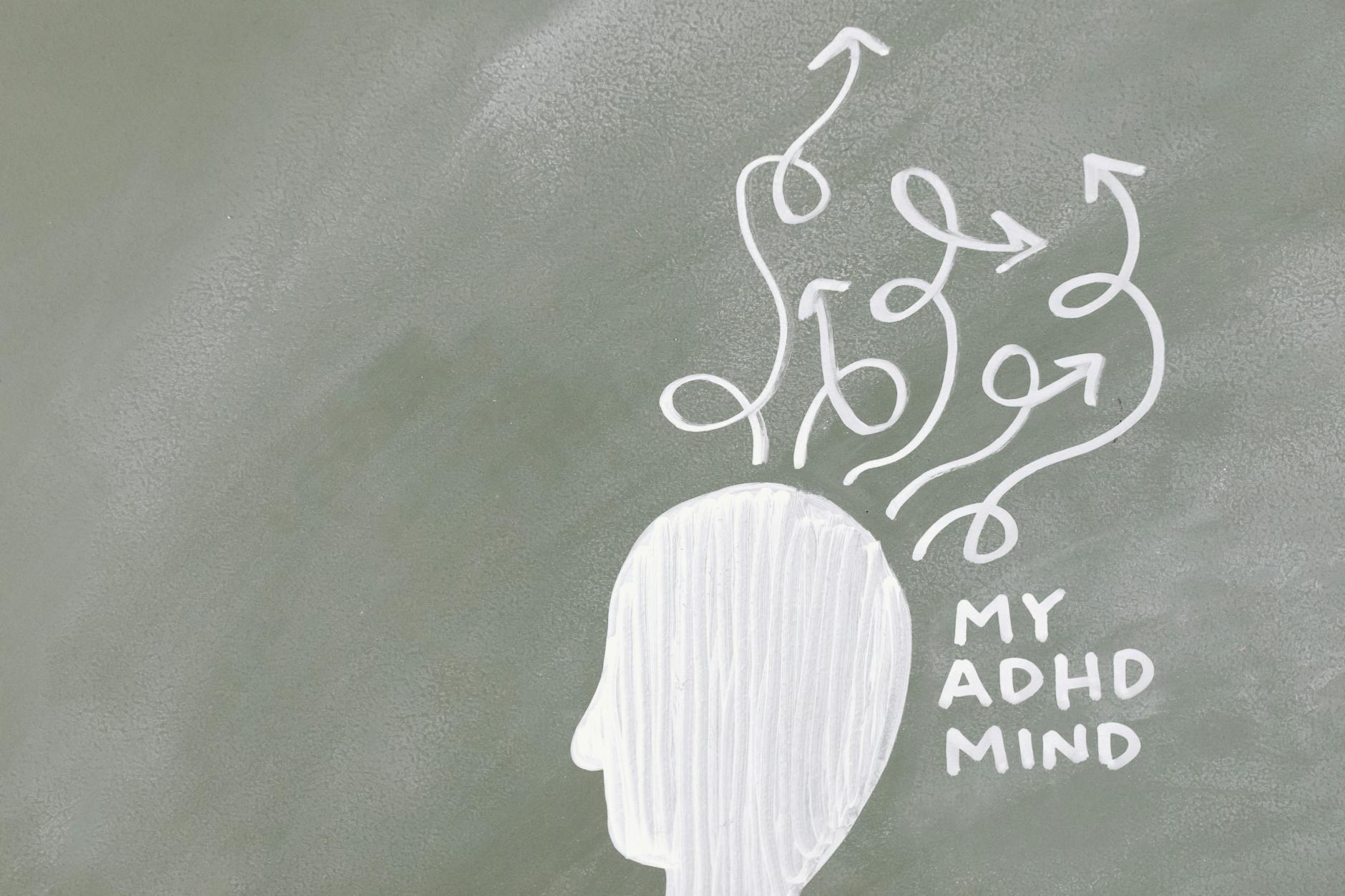
ADHD All or Nothing Thinking: The 2am Spiral Toolkit Nobody Gave You
Listen to this post
Hit play and do your thing. Ara reads it to you.
You know that thing where one small mistake convinces you that you've ruined everything forever?
Where a friend doesn't text back and suddenly you're certain they hate you, you're a terrible person, and you should probably just never leave your house again?
Yeah. That's all or nothing thinking, and if you have ADHD, your brain is probably doing it right now about something.
I wrote this post at 2am while stuck in one of these spirals myself. My brain had decided that because I forgot to reply to one Discord message, I was officially the worst community leader in history and should delete everything. Fun times.

Here's what I need you to know before we go any further. This isn't laziness. This isn't you being dramatic. This is your ADHD brain doing exactly what ADHD brains do when emotional dysregulation meets executive dysfunction.
And there's actually a toolkit for this. A real one that works when your prefrontal cortex has fully left the building.
Why ADHD Brains Go Full Black and White 🧠
All or nothing thinking is basically your brain's lazy shortcut when it's overwhelmed.
Instead of holding the complicated, nuanced truth (that most things exist on a spectrum), your brain just.. picks an extreme and commits to it with the energy of someone defending their PhD thesis.
According to ADDitude's piece on all-or-nothing thinking, this cognitive distortion shows up in about 70% of adults with ADHD. We're either crushing it or completely failing. There is no middle ground.
But here's the ADHD-specific twist that makes this worse for us.
Our brains already struggle with emotional regulation. We feel things at volume 11 when neurotypical brains are cruising at a 5. So when rejection sensitivity kicks in (and it always kicks in), that volume cranks straight to 47.
One critique becomes "everyone thinks I'm incompetent." One forgotten task becomes "I'm fundamentally broken and will never get my life together." One awkward social interaction becomes "I should never speak to humans again."
The spiral happens SO fast that by the time you realize you're in it, you're already three layers deep and your brain is writing your resignation letter from life.

I literally keep a playlist running when I'm working through these moments. The Lofi Cutie late night overthinking mix has genuinely saved me from some truly catastrophic 3am spirals. Something about the repetitive beats gives my brain something to anchor to while I'm trying to think my way out of the void.
The "What Else Is True?" Script (For When Your Brain Is Melting) 💜
Okay. You're in the spiral. Your brain has decided something absolute and terrible, and you can feel the panic rising.
Here's the tool that actually works when nothing else does.
It's called "What Else Is True?" and it's a cognitive defusion technique that doesn't require you to logic your way out of the feeling. You're not trying to convince yourself the thought is wrong. You're just.. adding more data.
Here's how it works in real time:
Your brain says: "I forgot to reply to that message. I'm a terrible friend and everyone secretly hates me."
Instead of fighting that thought (which never works), you ask: "Okay. What else is true?"
And then you fill in the blanks. Literally. Out loud if you need to.
What else is true: - I forgot to reply because I got distracted, not because I don't care - This person has also forgotten to reply to me before and I didn't hate them for it - I have other friendships that are going fine right now - Forgetting one message doesn't erase the 47 times I showed up for this person - My brain is doing the ADHD thing where one mistake feels like apocalypse
You're not trying to feel better. You're just trying to stop the spiral from eating you alive.
The magic here is that you're not asking your brain to let go of the catastrophic thought. You're just asking it to hold MORE thoughts at the same time. And that breaks the all-or-nothing cycle just enough for your prefrontal cortex to come back online.

This is the same framework therapists use for rejection sensitivity spirals, but adapted for the moments when you can't access therapy-brain because you're too deep in the feeling.
The Fill-in-the-Blank Spiral Breaker ✨
Here's the actual toolkit I keep on my phone for when I'm too far gone to think clearly.
Copy this. Screenshot it. Save it somewhere you'll actually find it at 2am when your brain is convinced you've ruined everything.
When my brain says: [the catastrophic thought]
What else is true: 1. The actual facts of what happened are: [just the facts, no interpretation] 2. A kind friend would probably say: [what would you tell YOUR best friend in this situation?] 3. The last time I felt this way about something, what actually happened was: [reality check from past spirals] 4. Three things that are currently going okay in my life: [force your brain to name them] 5. The emotion I'm feeling underneath this thought is: [scared? ashamed? overwhelmed?]
That last one is KEY. Usually the catastrophic thought is just your brain's way of trying to protect you from a scary feeling. If you can name the actual emotion, the thought loses some of its power.
Example from my own 2am notes last week:
When my brain says: I didn't finish my to-do list today so I'm completely failing at being a functional adult.
What else is true: 1. I finished 6 out of 10 things, which is more than half 2. A kind friend would say "dude you also dealt with a migraine today, cut yourself some slack" 3. The last time I spiraled about productivity, I still woke up the next day and kept going 4. I remembered to eat meals, I replied to my best friend, I took my meds 5. I'm feeling overwhelmed and scared that I'm not doing enough to build this community
Suddenly it's not "I'm a failure." It's "I'm scared and tired and my brain is being mean about it."
That I can work with.
🎵 Lofi Cutie — Deep Focus Playlist · Updated regularly · Open in YouTube
If you need something playing in the background while you work through your own spiral toolkit, I've got you. I literally wrote this entire post with that playlist on repeat.
When to Get Help vs. When to Use the Toolkit 🔥
Real talk for a second.
This toolkit is for garden-variety ADHD spirals. The kind that happen weekly (or daily) when your brain gets stuck in a loop and you need to interrupt the pattern.
It is NOT a replacement for therapy if you're dealing with: - Spirals that last for days or weeks without breaking - Thoughts that involve harming yourself or others - Panic attacks that make it hard to breathe or function - Depression that makes it hard to get out of bed
If that's where you are right now, please talk to someone. Like, actually. A therapist who specializes in ADHD and emotional dysregulation can give you tools that go way deeper than a blog post ever could.
This toolkit is for the in-between moments. The 2am spirals. The post-social-event replays. The "I made one mistake and now I'm spiraling" moments that happen when your ADHD brain is doing its thing.
Why This Works Better Than "Just Think Positive" 😅
You've probably already tried the toxic positivity approach.
Someone told you to "just focus on the good things" or "don't be so hard on yourself" and your brain immediately said "okay but what if I AM fundamentally broken though?"
Yeah. That doesn't work for ADHD brains.
The "What Else Is True?" framework works because it doesn't ask you to DENY the catastrophic thought. It just asks you to add context. Your brain can handle that, even mid-meltdown.
You're not saying "I'm NOT a terrible friend." You're saying "I forgot to reply to one message AND I also showed up for this person 47 other times." Both things can be true.
This is the difference between cognitive reframing (which requires a calm brain) and cognitive defusion (which works when you're actively spiraling). You're not trying to change the thought. You're just trying to loosen its grip.
The more you practice this when the stakes are low, the easier it becomes to access when your brain is fully convinced the world is ending.

The Community Piece Nobody Talks About 🌱
Here's the thing about all or nothing thinking that I didn't understand until I started building The ADHD Nest.
These spirals are SO much worse when you're dealing with them alone.
When it's just you and your brain at 2am, the catastrophic thought has nothing to compete with. No other perspectives. No reality checks. Just you and the spiral, going around and around until you're completely convinced.
But when you have people who GET it? Who can say "hey I've been there, here's what actually happened when I had that same thought"? The spiral loses power.
We have a whole channel in The ADHD Nest Discord for these moments. It's called "spiral-support" and it's genuinely one of the most-used spaces we have. Because sometimes you just need another ADHD brain to say "yeah that thought is loud but it's also lying to you."
You don't have to white-knuckle these spirals alone. That's the whole point of building this space.
The Bottom Line
All or nothing thinking isn't a character flaw. It's not you being dramatic or broken or too sensitive.
It's your ADHD brain doing exactly what ADHD brains do when emotional dysregulation meets executive dysfunction. And there's a toolkit for it that actually works when your prefrontal cortex has fully checked out.
The "What Else Is True?" framework won't make the spirals stop happening. But it WILL give you a way to interrupt them before they eat your whole night. And honestly? That's enough.
Come practice this with us in The ADHD Nest. We're all figuring this out together, one 2am spiral at a time.
Your Turn 🪴
What's a spiral you've been stuck in lately? Drop it in the comments. Sometimes just naming it takes away some of its power. 💜