ADHD Can't Sleep at Night? Your Brain Isn't Broken, Just Wired
Racing thoughts keeping you awake? Here's why ADHD brains struggle to sleep at night, plus actual strategies that work when your brain won't shut up.


ADHD Can't Sleep at Night? Racing Thoughts Are Not Your Fault
Listen to this post
Hit play and do your thing. Ara reads it to you.
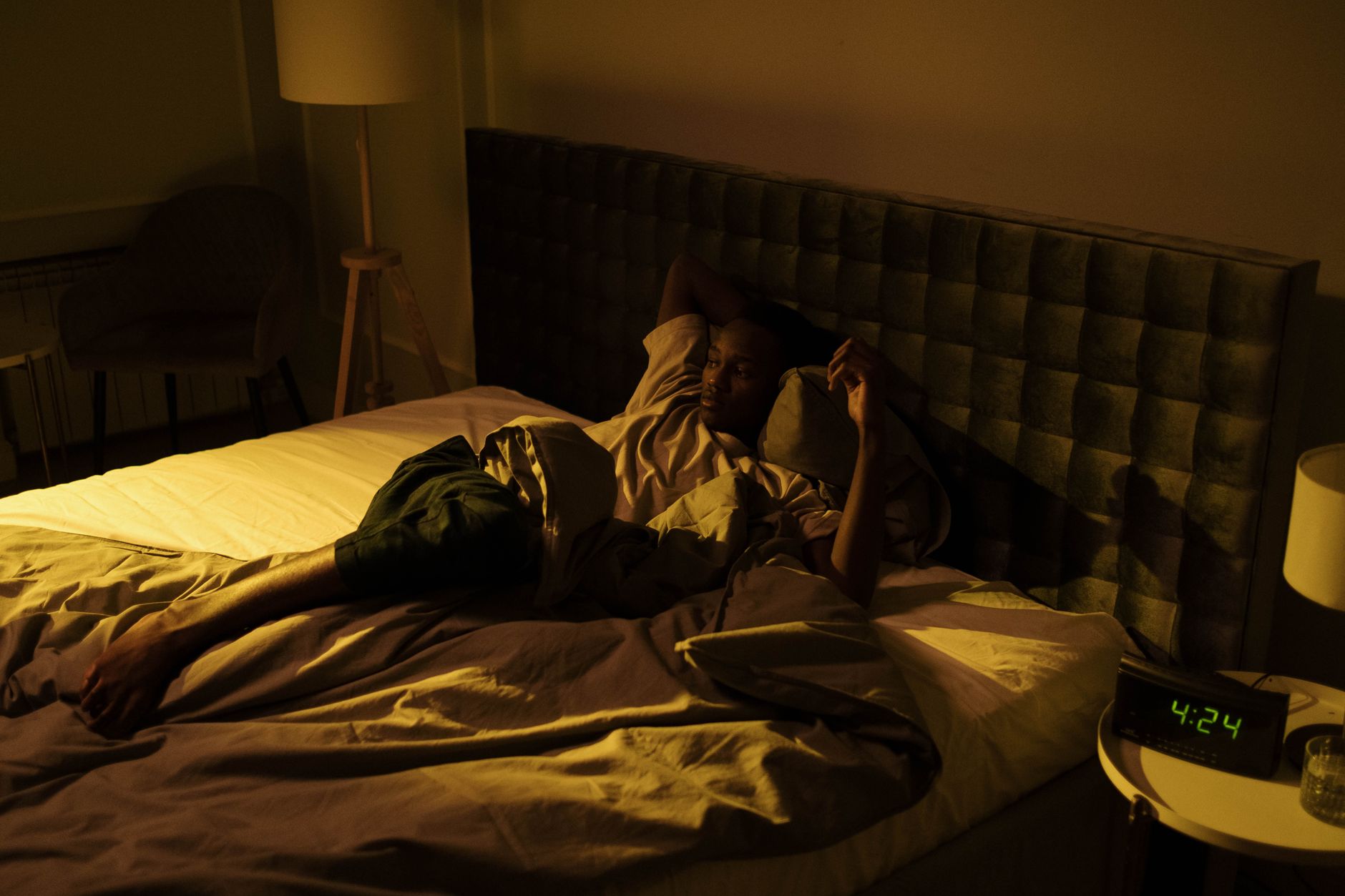
It's 2:47 AM. You've been lying here for three hours. Your body is exhausted but your brain is throwing a full-blown rave about that email you forgot to send, the thing you said in 2019 that probably sounded weird, tomorrow's to-do list, whether you locked the door, that TikTok you watched six hours ago, and oh god did you turn off the stove?
You're not alone in this. And you're definitely not broken.
If you have ADHD and you can't sleep at night because racing thoughts won't let you, there's actual science behind why this happens. More importantly, there are real strategies that work when your brain refuses to cooperate with the whole "resting" concept.
Why Your ADHD Brain Won't Shut Up at Night 🧠
Here's the thing about ADHD brains and sleep. We're not just "bad sleepers" or night owls by choice.
Research shows that up to 70% of adults with ADHD struggle with ADHD and sleep research. Our brains have a delayed circadian rhythm, which is a fancy way of saying our internal clocks are set differently than neurotypical brains.
Your brain isn't winding down when it's supposed to. It's ramping up.
The same executive function issues that make it hard to start tasks during the day make it nearly impossible to stop thinking at night. Your brain doesn't have an off switch. It has 47 open tabs, a YouTube autoplay queue, and zero concept of "business hours."
Add in anxiety (hello, comorbidity), medication wearing off, or the fact that nighttime is finally quiet enough for all those thoughts you've been suppressing all day to surface? Yeah. Sleep becomes this impossible thing you're supposed to just.. do.
The delayed sleep phase in ADHD means you're genuinely not tired when the rest of the world is sleeping. You're biologically wired to be alert later. Society just didn't get the memo.
The Racing Thoughts Aren't Random (Even Though They Feel Like It) 💭
When you can't sleep at night, those racing thoughts feel completely chaotic. But there's usually a pattern hiding underneath.
Your ADHD brain struggles with task switching. During the day, external stimuli keep pulling your attention around. But at night, when everything goes quiet, your brain finally has space to process.. and it processes EVERYTHING at once.
Unfinished tasks from three weeks ago. Conversations you need to have. Things you forgot to do. Creative ideas. Worries. Random facts. That one embarrassing thing from middle school.
It's not that these thoughts are more important at 3 AM. It's that your brain finally has the bandwidth to notice them, and it doesn't know how to prioritize or let them go.
This is the same reason why ADHD brains struggle to slow down even when we're exhausted. We're stuck in a state of hyperawareness with no off-ramp.
The irony? The more you try to force yourself to stop thinking, the more your brain spins. Telling an ADHD brain to "just relax" is like telling a browser with 50 tabs open to "just close yourself."

Actual Strategies That Work When Your Brain Won't Shut Up ✨
Okay. Let's get practical. These aren't generic "sleep hygiene" tips you've seen a thousand times. These are strategies for when your brain is genuinely refusing to cooperate.
The Brain Dump Method
Keep a notebook next to your bed. Not your phone. An actual notebook.
When thoughts start spiraling, write them down. Not in organized bullet points. Just dump everything onto the page. Messy is fine. The goal isn't to solve anything. It's to get the thoughts OUT of your head and onto paper so your brain can stop trying to hold onto them.
This works because ADHD brains are terrible at holding information in working memory. Once it's written down, your brain can (sometimes) let it go.
The 4-7-8 Breathing Trick
Breathe in for 4 counts. Hold for 7. Exhale slowly for 8.
This sounds too simple to work, but it forces your brain to focus on counting instead of spiraling. The longer exhale activates your parasympathetic nervous system, which is the thing that tells your body "hey, we're safe, we can rest now."
Do this 4 to 6 times. If your brain wanders, that's fine. Just come back to the counting.
Give Your Brain Something Soft to Hold Onto
This is where audio becomes your secret weapon.
I made a playlist specifically for this. It's calming lofi for sleep, designed with no sudden changes, no jarring sounds, just gentle repetitive audio. Your brain gets something to focus on that isn't your own thoughts.
Some people swear by brown noise for sleep because it's deeper and more grounding than white noise. Others need guided meditations or sleep stories.
The key is giving your brain a soft anchor. Something present enough to hold attention, but calm enough not to stimulate. It's like a fidget toy for your auditory processing.
The "I'm Not Trying to Sleep" Trick
This one feels counterintuitive, but hear me out.
Stop trying to fall asleep. Seriously.
Tell yourself, "I'm just resting. Sleep can happen or not. I'm just going to lie here and exist."
The moment you release the pressure to sleep, your brain stops fighting you. ADHD brains are oppositional by nature. The harder you try to force something, the more it resists.
Just rest. That's enough.
The Military Sleep Method (But Make It ADHD-Friendly)
You've probably seen the viral military sleep hack. Here's the ADHD-adapted version.
Lie on your back. Consciously relax your face. Your jaw, your tongue, the space between your eyebrows. Then progressively relax your body from the top down. Shoulders, arms, chest, legs.
Here's the ADHD part: your brain WILL wander. Don't fight it. Just notice when it happens, and gently bring your attention back to the body part you're relaxing.
It's not about perfection. It's about giving your brain a task that's boring enough to let go of.

What About Medication and Caffeine? ⏰
Let's talk about the stuff nobody mentions in those generic sleep articles.
If you take stimulant medication for ADHD, the timing matters. A lot.
Some people find that their racing thoughts get WORSE when their meds wear off in the evening. That's the rebound effect. Your brain was being regulated all day, and now it's suddenly flying solo again.
Others find that taking their medication too late keeps them wired at night.
Talk to your doctor about timing. Some people do better with a small afternoon dose to smooth out the evening rebound. Others need to take their last dose earlier in the day.
And caffeine? Yeah, that's complicated too.
ADHD brains process caffeine differently. Some people can drink coffee at 9 PM and sleep fine. Others are wired for hours.
Track your patterns. If you can't sleep at night and you had caffeine after 2 PM, try cutting it off earlier for a week and see what happens.
There's no universal rule here. Your brain is allowed to be different.
The Community Sleep Struggle Is Real 💜
You know what helps when you can't sleep at night? Knowing you're not the only one awake.
There's something deeply comforting about realizing that right now, at whatever ungodly hour you're reading this, there are dozens of other ADHD brains also lying awake, also spiraling, also wondering if they're broken.
You're not broken. You're just wired differently. And honestly? Some of the most creative, interesting thoughts happen at 3 AM. They're just inconveniently timed.
We talk about this stuff all the time in The ADHD Nest. There's a whole channel for late-night brain spirals and sleep struggles. It's free, it's warm, and you're welcome here. join.adhdnest.org
The Bottom Line
If you have ADHD and you can't sleep at night because racing thoughts won't stop, you're not failing at sleep. Your brain is doing exactly what ADHD brains do.
You can try the strategies. You can give your brain something soft to focus on. You can release the pressure to sleep perfectly.
But most importantly, you can stop blaming yourself.
Sleep is hard for us. It just is. Some nights you'll get it right. Some nights you won't. Both are okay.
You're doing better than you think. Even on the nights when your brain won't shut up and you're lying there at 3 AM wondering if you'll ever be normal.
You're already enough. Sleep or no sleep.
If you need something to listen to right now, something gentle to give your brain a soft place to land, I've got you covered. Come hang out in our calming lofi space. No pressure. Just rest.
Your Turn 🪴
What time does your brain finally let you sleep? And what's your go-to "tricking my brain into rest" strategy? 🌙