ADHD Sleep Problems: Why Your Brain Won't Shut Up at Night
Why does ADHD make sleep impossible? From revenge bedtime procrastination to racing thoughts, here's what actually helps when your brain won't shut up.


ADHD Sleep Problems: Why Your Brain Won't Shut Up at Night
Listen to this post
Hit play and do your thing. Ara reads it to you.
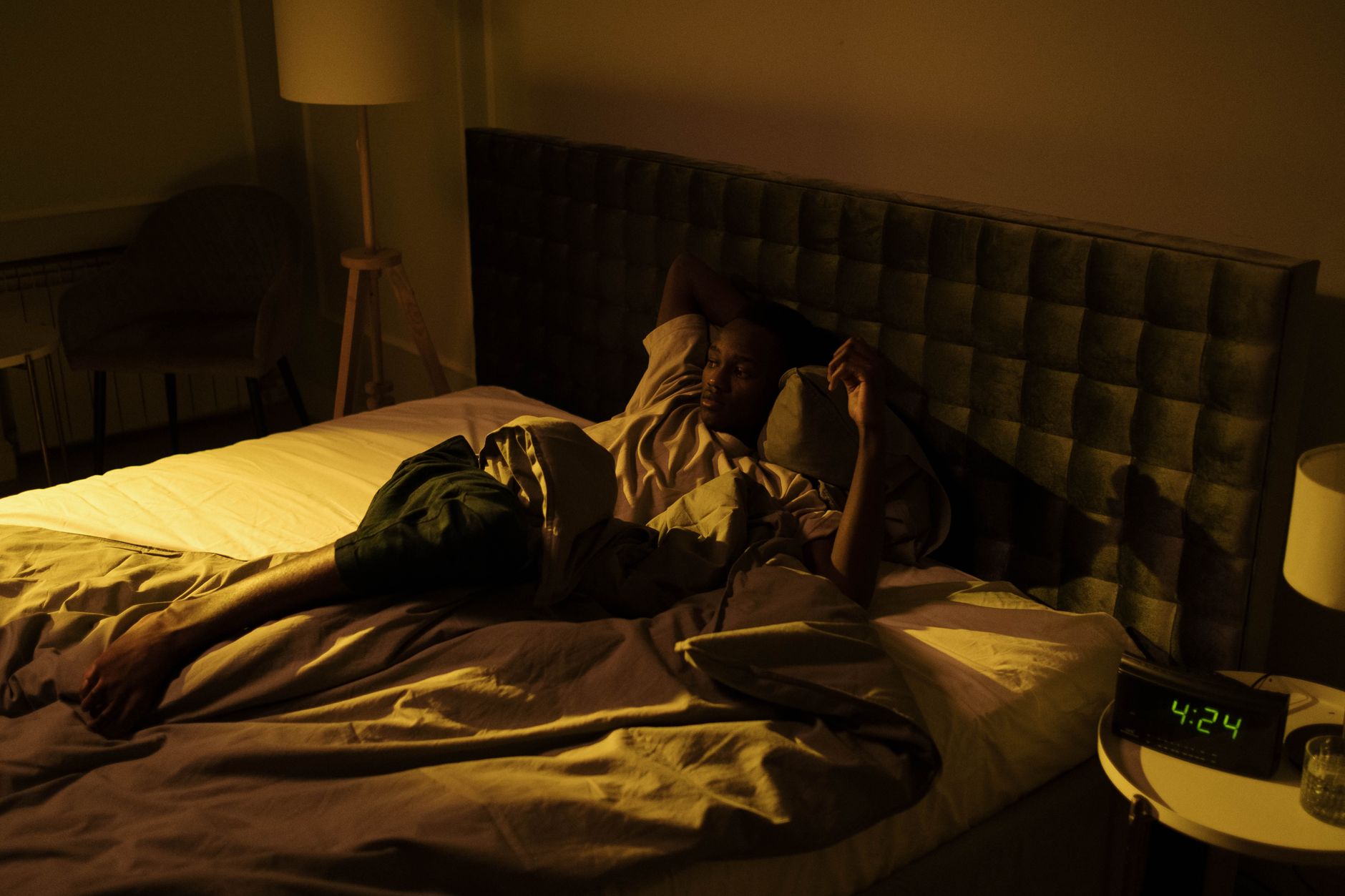
It's 2 a.m. You've been lying here for three hours. Your body is exhausted. Your brain? Running a full production of every conversation you've ever had, the complete lyrics to a song from 2009, and a detailed analysis of whether you said "you too" wrong at the coffee shop six years ago.
Sleep ought to be simple, right? Close eyes, wait, done. But if you have ADHD, bedtime feels like trying to turn off a computer that has 47 programs running in the background. The shutdown button is RIGHT THERE. You just… can't reach it.
And here's the thing nobody tells you: ADHD and delayed sleep phase is physiologically real. It's not that you're bad at sleep. Your brain's internal clock is literally running 2-3 hours behind everyone else's. When neurotypical people are winding down at 10 p.m., your brain is just hitting its stride.
So you're not broken. You're not lazy. Your nervous system is just on a different timezone than the rest of the world.
The ADHD Sleep Struggle Is So Specific 😅
Let me paint you a picture. You KNOW you need to sleep. You set seventeen alarms for the morning. You told yourself tonight would be different.
But then you remembered you never replied to that text from Tuesday. And you should probably reorganize your bookmarks. And actually, you've been meaning to research whether dolphins sleep with one eye open (they do, and now you're 40 minutes deep in marine biology).
One more scroll. One more episode. One more video.

This is revenge bedtime procrastination, and it's painfully common with ADHD. During the day, everyone else controlled your time. Work, obligations, other people's schedules. Nighttime is the first moment your brain feels like it belongs to YOU again.
So you stay up. Not because you want to be tired tomorrow. Because this quiet, dark, uninterrupted time is the only part of the day that feels like yours.
And then there's the classic ADHD sleep problem trifecta:
Racing thoughts. Your brain treats bedtime like a staff meeting. Suddenly every unfinished task, awkward interaction, and random question demands immediate attention. Why did I say that in 2014? What if I forget to pay that bill? Is a hot dog a sandwich?
Hyperfocus collapse. You spent six hours building a Notion template or reorganizing your entire Spotify library. You forgot to eat. You forgot time exists. Now it's 1 a.m. and your brain is wired like you just drank four espressos.
Medication wearing off. If you take stimulant meds, they've fully left your system by bedtime. The structure they provided? Gone. Now it's just you and your unmedicated brain trying to agree on a reasonable bedtime. Spoiler: you will not agree.
Why ADHD Brains Treat Sleep Like an Optional Activity 🧠
Here's what's happening under the hood.
Your circadian rhythm is delayed. Most people's brains start producing melatonin (the sleepy hormone) around 9 or 10 p.m. ADHD brains? We're on a delay. Our melatonin doesn't kick in until midnight or later. You're not a night owl by choice. Your brain chemistry made you this way.
Your nervous system won't downshift. ADHD means your brain has trouble transitioning between states. Going from "awake and doing things" to "calm and sleepy" requires a gear shift your brain doesn't have. It's like trying to go from fifth gear straight into park.
Hyperarousal is your default setting. Even when you're exhausted, your nervous system stays on high alert. External sounds, internal thoughts, the feeling of the sheets, the fact that you're thinking about the fact that you're thinking. Everything is LOUD when you're trying to sleep.
And then, because the universe has a sense of humour, you finally fall asleep at 4 a.m… and your alarm goes off at 7. You spend the whole day in a fog. You tell yourself tonight will be different.
It is not different.

What Actually Helps (From Someone Who's Tried Everything)
I'm not going to tell you to "practice good sleep hygiene" like that phrase means anything. I'm going to tell you what actually worked when my brain was doing backflips at 2 a.m.
The 20-Minute Rule That Saved My Sleep
If you've been lying there for 20 minutes and sleep isn't happening, get up. I know that sounds wrong. But staying in bed awake teaches your brain that bed = anxious thought spiral time.
Get up. Go to another room. Do something boring and low-light. I'm talking folding laundry, journaling, reading something dry (tax law, anyone?). When you feel actually sleepy, go back to bed.
This is called stimulus control therapy, and it works by retraining your brain to associate bed with sleep, not with overthinking your existence.
Sound Saved Me (Specifically This Sound)
Racing thoughts were my biggest sleep enemy. I tried meditating. I tried breathing exercises. My brain laughed at all of it.
Then I discovered that my brain will ACTUALLY shut up if I give it something else to focus on. Something rhythmic, ambient, and just interesting enough to stop the thought spiral but not interesting enough to keep me awake.
Lofi music became my sleep medicine. Specifically the calmer, more ambient stuff. I started putting on lofi music for focus during the day, and then at night I'd switch to even softer lofi beats.
If you need something to try tonight, I've got you. I stream lofi music on YouTube specifically for ADHD brains that won't shut up. The nighttime streams are slower, warmer, no sudden changes. It's like handing your overactive brain a soft repetitive task so it stops trying to solve world hunger at midnight.
Some people swear by brown noise or white noise. For me, it's the lofi beats with that nostalgic, rainy-day vibe. Your mileage may vary. The point is: give your brain something to hold onto besides your own spiraling thoughts.
The Bedtime I Actually Stick To (Most Nights)
Here's the routine that works when I'm not actively self-sabotaging:
9:30 p.m.. Phone goes on the charger. In another room. I'm serious. If it's within arm's reach, I will "just check one thing" and lose 90 minutes.
10:00 p.m.. Dim the lights. This is my brain's signal that we're shifting gears. I'll put on a cozy video or some lofi music and do something with my hands. Journaling, skincare, folding laundry. Anything tactile and repetitive.
10:30 p.m.. The actual wind-down. I get in bed, keep the lighting low, and put on my sleep lofi playlist. I do NOT check my phone. I do NOT start a new task. This is the "we're going to sleep now" part of the evening.
11:00 p.m.. Lights out. If I'm not asleep by 11:20, I get up and reset (see the 20-minute rule above).
Does this work every night? Absolutely not. But it works often enough that I'm no longer walking around like a zombie 90% of the time.
The Military Sleep Trick Everyone Talks About
You've probably seen this one floating around TikTok. It's called the military method, and apparently, they teach it to soldiers who need to fall asleep in combat zones (which, honestly, is the vibe of an ADHD brain at night).
Here's the process:
1. Relax your face completely. Jaw, tongue, eyes, forehead. Everything. 2. Drop your shoulders and let your arms go heavy. 3. Breathe slowly and let your chest, then your legs, go limp. 4. Clear your mind for 10 seconds. (Good luck with that part.) 5. If thoughts creep in, repeat "don't think" over and over.
I'll be honest, step 4 is where this method falls apart for ADHD brains. "Clear your mind" is like telling a hurricane to calm down. But the body relaxation part? That actually helps. Paired with sound (lofi, brown noise, rain sounds), it works better than it has any right to.
When It's More Than Just ADHD Sleep Weirdness
Sometimes, sleep problems go beyond the standard ADHD chaos. If you're dealing with any of these, it's worth talking to a doctor:
You're sleeping 8+ hours but still feel completely destroyed every day. (Could be sleep apnea, which is more common with ADHD.)
You physically cannot fall asleep before 3 or 4 a.m. no matter what you try, and it's wrecking your life. (Delayed sleep phase disorder is real and treatable.)
You're having intense nightmares, night sweats, or waking up in full panic mode. (Anxiety, trauma, or medication side effects might be at play.)
Sleep problems and ADHD overwhelm can create a vicious cycle. Bad sleep makes ADHD symptoms worse. Worse ADHD symptoms make sleep harder. If you're stuck in that loop and nothing's helping, you're not failing. You just need more support than a blog post can give.

The Bottom Line 💜
ADHD sleep problems are real, and they're exhausting. Your brain isn't trying to sabotage you. It's just wired differently, running on a delayed internal clock that doesn't match the 9-to-5 world.
You're not lazy for staying up late. You're not broken for struggling with sleep. You're working with a nervous system that treats bedtime like an optional suggestion.
What helps: routines you can actually stick to, sound that quiets the brain noise, and letting go of the idea that you need to sleep like a neurotypical person.
We talk about this stuff all the time in The ADHD Nest Discord. Late-night ADHD brain spirals, what's actually working, and a lot of "wait, you too?" moments. It's free, and it's full of people who get it. Join us here.
Your Turn 🪴
What's your sleep gremlin? Revenge bedtime procrastination, racing thoughts, or the classic "one more episode"? And what actually works for you? 🌙