Why Criticism Cuts So Deep With ADHD Rejection Sensitivity
RSD in ADHD feels like emotional whiplash. Learn why rejection sensitivity happens, how to tell when it's RSD, and what actually helps when it hits.


Rejection Sensitive Dysphoria & ADHD: When Criticism Feels Like a Knife
Listen to this post
Hit play and do your thing. Ara reads it to you.
Your coworker says "hey, can we talk later?" and your brain immediately goes to: you're fired, everyone hates you, you've ruined everything, and also you should probably move to another country.
Or someone takes three hours to text back and you're convinced the friendship is over. Not "oh they're probably busy" but full spiral. Like, planning the funeral for a relationship that's definitely not dead.
If that sounds familiar, you might be dealing with rejection sensitive dysphoria. And if you have ADHD, there's a really good chance you know this feeling in your bones.

What Even Is Rejection Sensitive Dysphoria?
Rejection Sensitive Dysphoria (RSD) is basically your brain's smoke alarm going off because someone toasted bread three houses away.
It's an intense emotional response to perceived rejection or criticism. Not just "aw that hurt" but full body, can't breathe, world ending, physical pain kind of response. Dr. William Dodson's work on RSD describes it as "extreme emotional pain triggered by the perception that a person has been rejected or criticized."
The tricky part? The rejection doesn't have to be real.
Your boss could say "good work, just fix this one typo" and your brain hears "you're incompetent and I regret hiring you." A friend cancels plans because they're sick and you're convinced they actually just don't want to see you anymore.
RSD isn't about being sensitive or needing to toughen up. It's your nervous system genuinely perceiving threat where there isn't one. It's emotional dysregulation in ADHD doing what it does best, which is taking normal situations and cranking the volume to eleven.
Why ADHD Brains and RSD Are Basically Best Friends (Unfortunately)
Here's the thing nobody tells you when you get diagnosed: ADHD isn't just about focus.
It's about emotional regulation too. And research on emotional regulation and ADHD shows that people with ADHD process emotions more intensely and have a harder time managing emotional responses.
Your brain doesn't have a good filter for emotional intensity. Happy feels AMAZING. Sad feels like the end of the world. And rejection? Rejection feels like getting hit by a truck.
Add in a lifetime of actual rejection (because let's be real, growing up with undiagnosed ADHD meant a LOT of "why can't you just try harder?" and "you're so smart but so lazy" comments), and your brain gets really good at spotting rejection everywhere.
It's like your nervous system developed a PhD in Finding Ways You Might Be Disappointing People.

Some researchers think RSD happens because ADHD brains are wired to be more reactive to emotional stimuli. CHADD on ADHD and emotions explains that emotional impulsivity is just as much a part of ADHD as trouble focusing, but somehow it doesn't make it into the diagnostic criteria.
So you get diagnosed because you can't find your keys, but nobody mentions that your emotions are going to feel like they're happening AT you instead of WITH you.
What RSD Actually Feels Like (In Case You're Wondering If This Is You)
Let me paint you a picture.
Someone gives you constructive feedback at work. Totally reasonable feedback. "Hey, can you add more detail to this section?"
A non-RSD brain thinks: "Oh okay, I'll add more detail."
An RSD brain thinks: "I'm terrible at my job. They hate this. They probably hate me. Everyone probably talks about how bad I am at this when I'm not around. I should quit before they fire me. Actually I should change careers entirely. Maybe I should just become a hermit."
All of that happens in about four seconds.
Here's what RSD can look like in real life:
You avoid asking questions because what if they think you're dumb? You don't share your ideas because what if people think they're bad? You overwork yourself trying to be perfect because criticism feels physically painful. You ghost friends because you're convinced they're annoyed with you anyway.
You cancel plans last minute because your brain says "they don't actually want you there." You read into every text, every tone, every facial expression, looking for signs that someone is disappointed in you.
And the worst part? Sometimes you get SO good at avoiding rejection that you reject yourself first. You quit before you can fail. You don't apply for the job. You don't send the message. You play it safe because safe means you can't get hurt.
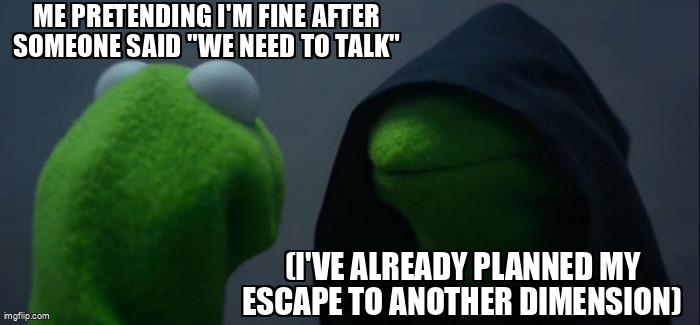
This is why ADHD friendships are complicated. It's hard to maintain relationships when your brain is constantly scanning for evidence that people are done with you.
What Doesn't Help (But Everyone Suggests Anyway)
Let's get this out of the way.
"Just don't take things personally." Cool, thanks, I'm cured.
"You're being too sensitive." Oh wow, had no idea, guess I'll just stop having a nervous system.
"Have you tried not caring what people think?" Yes, actually. Turns out my brain doesn't have an off switch for that.
People mean well, but telling someone with RSD to "just relax" is like telling someone with a broken leg to "just walk it off." It fundamentally misunderstands what's happening.
RSD isn't a choice. It's not you being dramatic or attention seeking. It's your nervous system doing what it genuinely believes is necessary for survival, which is responding to perceived social threat like it's a physical one.
You can't logic your way out of it in the moment because the emotional response happens faster than conscious thought.
What Actually Helps When RSD Hits
Okay, real talk. There's no magic cure for RSD. I'm not going to tell you to journal it away or that positive affirmations will fix everything.
But here's what actually helps some of us ride out the wave when rejection feelings hit hard.
Name it when it's happening. Literally say (out loud or in your head): "This is RSD. This feeling is real but the threat isn't." It doesn't make the feeling go away, but it gives you a little distance from it. You're not spiraling, you're having an RSD episode. Those are different things.
Delay big decisions. When RSD hits, your brain wants you to quit, run, ghost, burn bridges, or make massive life changes immediately. Don't. Give yourself 24 hours before acting on any impulse that feels urgent. The intensity usually fades enough to think clearly.
Have a person who gets it. One friend who knows what RSD is and won't think you're being dramatic when you text "I think everyone hates me because my boss said 'thanks' instead of 'thank you so much.'" That person is gold.
Reality check with evidence. Not to invalidate your feelings, but to gently remind yourself of facts. "They cancelled plans" is a fact. "They cancelled because they hate me" is RSD talking. What's the actual evidence? Usually there isn't any.
Do something physical. RSD gets stuck in your body. Sometimes a walk, cold water on your face, or literally shaking out your arms can help discharge some of that emotional energy. It sounds too simple to work but it genuinely helps.
And sometimes? Sometimes you just need to let gentle music hold space while you ride it out.
When RSD hits me hard and I can't think my way out, I put on headphones and let something soft and instrumental do the heavy lifting for a bit. It doesn't fix it, but it makes it feel less alone.
If you need something calming right now, I've got a whole playlist of gentle lofi on YouTube that's gotten me through more RSD spirals than I can count. Sometimes you just need something that doesn't ask anything of you.
🎵 Lofi Cutie — Deep Focus Playlist · Updated regularly · Open in YouTube
Medication can help. Some people find that ADHD medication reduces RSD intensity because it helps with emotional regulation overall. Alpha agonists like guanfacine are sometimes prescribed specifically for emotional symptoms. This is worth talking to your doctor about if RSD is really impacting your life.
Therapy helps too. Specifically, finding a therapist who understands ADHD and doesn't just tell you to "reframe your thoughts." Cognitive behavioural strategies can help, but only if they account for how ADHD brains actually work.
The Thing Nobody Talks About: RSD and Overachieving
Here's a plot twist.
A lot of people with RSD become absolutely exceptional at things because they're terrified of criticism. You work twice as hard as everyone else. You triple check everything. You say yes to every request because saying no might disappoint someone.
From the outside, you look like you have it together. High achieving, reliable, always going above and beyond.
From the inside? You're running on fumes, trying to be perfect enough that nobody has a reason to reject you.
This is why burnout and ADHD are basically roommates. You can't sustain "perfect" forever, but RSD makes it feel like anything less than perfect is dangerous.
If that's you, please hear this: you are not required to be extraordinary just to be acceptable.
You don't have to earn your place in people's lives by being useful or impressive or always available. The people who matter will stick around even when you're messy, even when you mess up, even when you're just.. regular.
I know RSD makes that hard to believe. But it's true anyway.
Living With RSD (Not Solving It)
I'm not going to lie and tell you RSD gets easy.
Some days are better than others. Some days you can catch it early and talk yourself down. Some days it steamrolls you and all you can do is wait it out.
What does get easier is recognizing it for what it is. It's not intuition. It's not your gut telling you the truth. It's your nervous system doing what it was wired to do, which is protect you from social pain by assuming the worst.
You can acknowledge that RSD is real and painful while also knowing that it's not always accurate.
And on the days when it feels impossible? That's what community is for. You don't have to white knuckle through this alone.
We talk about RSD a lot in The ADHD Nest Discord because it's something almost everyone with ADHD deals with, but it's still weirdly isolating. Come find us if you need people who get it without explanation: https://join.adhdnest.org/
The Bottom Line
Rejection Sensitive Dysphoria is not you being dramatic.
It's a real, intense emotional experience that happens when your ADHD brain perceives rejection or criticism. It feels awful, it can be disabling, and it's not something you can just think your way out of.
But it's also not permanent in each moment. The intensity fades. The spiral ends. And with practice, you get better at recognizing it and riding it out without letting it make big decisions for you.
You're not broken for feeling this way. Your nervous system is doing what it thinks it needs to do. And you're allowed to need support while you figure out how to live with it.
Your Turn 🪴
Does RSD hit you out of nowhere, or can you usually tell when it's building? I'd love to hear what helps you ride out the wave when rejection feelings get intense.