ADHD sleep strategies
Practical ADHD sleep strategies from someone who gets it. Stop fighting your brain at 2am. Join our founding community for real support that works.


ADHD Sleep Strategies That Work With Your Brain, Not Against It
Let me guess. You're reading this at 1:47am, absolutely wired, after spending three hours reorganizing your bookshelf by color because your brain suddenly decided that aesthetic consistency was a survival priority.
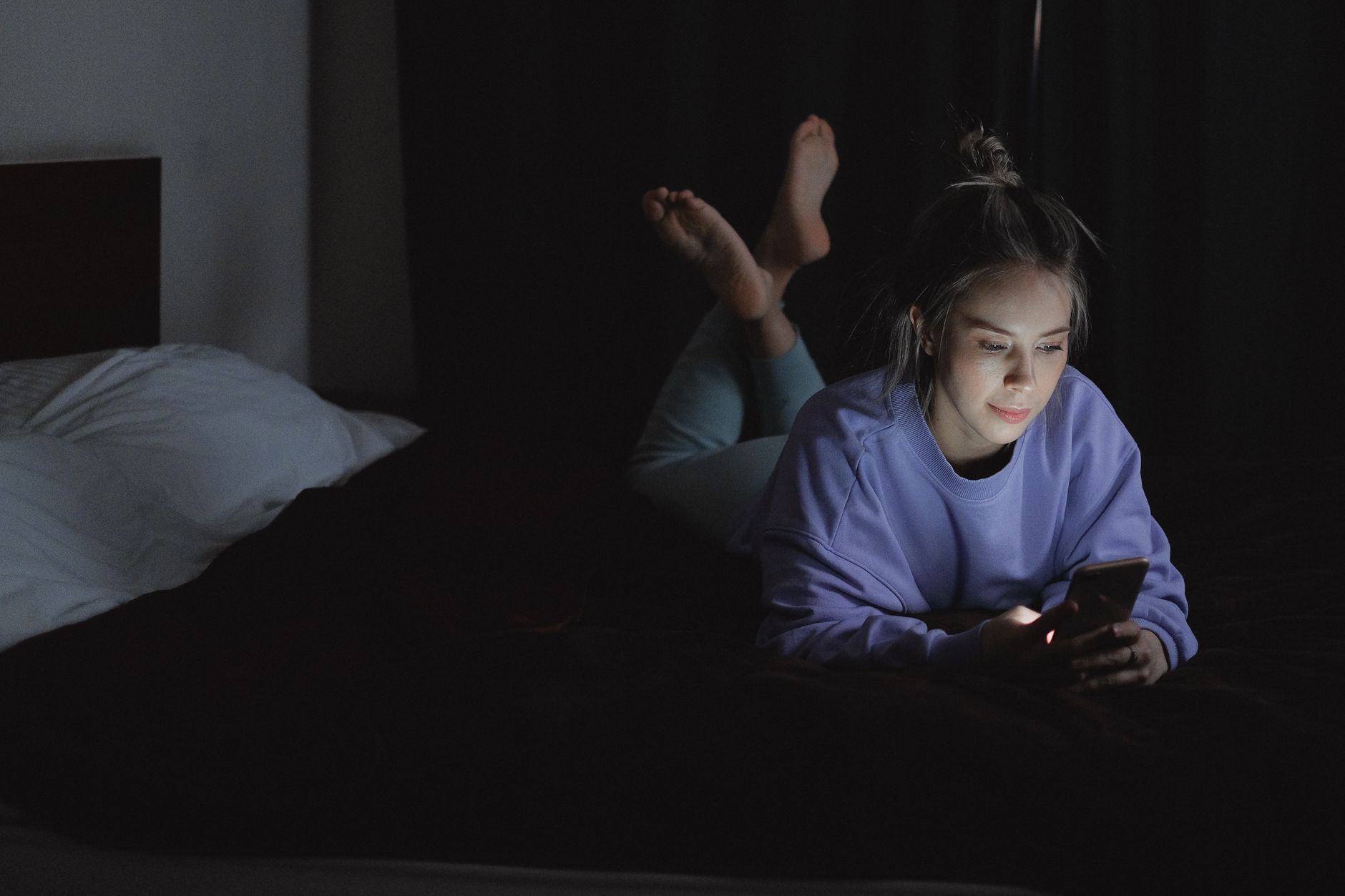
Or maybe you're exhausted but still scrolling, because stopping feels impossible and sleep feels like giving up control of the only quiet hours you've had all day.
Yeah. I see you.
ADHD doesn't just make falling asleep hard. It turns bedtime into a full contact sport between your intention to rest and your brain's absolute certainty that NOW is when we need to research medieval farming techniques.
And here's what nobody tells you: the sleep strategies that work for neurotypical brains often backfire spectacularly for us. "Just relax" is not advice. It's a taunt.
So let's talk about ADHD sleep strategies that actually account for how our brains work. Not the stuff that sounds good on an Instagram carousel. The stuff that works when your brain is doing its chaotic goblin thing at midnight.
Why Sleep Is So Uniquely Terrible With ADHD
It's not just insomnia. It's a whole collection of sleep problems that team up like a dysfunctional group project.
The dopamine timing disaster. Research reported by ADDitude Magazine shows that ADHD brains often produce dopamine and melatonin on a delayed schedule. Your brain is genuinely more awake when it should be winding down. You are not making this up. This is neurobiology being rude.
The working memory overnight shift. Your brain uses working memory to hold anxious thoughts, unfinished tasks, and every moderately embarrassing thing you've ever said. At night, when distractions disappear, all of that floods in at once. Suddenly you're mentally rewriting an email you sent in 2019.
The hyperactivity that never clocked out. Even if you don't have the stereotypical "bouncing off walls" type of ADHD, the internal hyperactivity doesn't stop. Your thoughts race. Your body feels restless. Lying still feels like holding your breath.
And then there's the fun twist: poor sleep makes your ADHD symptoms worse during the day, which makes the next night harder, which makes your symptoms worse, which… you get it. It's a loop, and it's exhausting.
The Revenge Bedtime Procrastination Trap
Here's the one that gets me every single time.
You stay up way too late, not because you're not tired, but because going to bed feels like giving up the only time that's actually yours. The day took everything from you. This quiet, nobody-asking-anything window feels like the only space you control.
So you scroll. You watch one more episode. You start a new craft project at 11pm. You are not being self destructive. You are clawing back something that felt taken from you all day.
CHADD calls this revenge bedtime procrastination, and it's incredibly common with ADHD. The problem is that it compounds everything else. You lose sleep, your executive function tanks harder the next day, and the cycle deepens.
The fix is not "just go to bed earlier." The fix is building daytime moments that give you that same feeling of autonomy and peace so bedtime doesn't feel like a loss.

ADHD Sleep Strategies That Actually Work
Okay. Here's what helps, based on reporting from sleep researchers, ADHD specialists, and a whole lot of trial and error from those of us living this.
1. Work with your delayed sleep phase, not against it
If your brain doesn't get sleepy until 1am, fighting that is misery. Start there. Build your schedule around your actual sleep window when possible, not the one you think you "should" have.
If you can't shift your whole life, try light therapy in the morning. Bright light exposure right after waking can help nudge your circadian rhythm earlier over time. It's slow, but it's real.
2. Create a shutdown ritual your brain can't ignore
The problem with "bedtime routines" is that they're boring, and our brains tune out boring things instantly.
Your shutdown ritual needs to be interesting enough to hold your attention but calm enough to cue your brain that we're winding down. Here's what works for me:
- Dim the lights an hour before bed. Darkness is a biological cue. Use it. - Do something mildly engaging with your hands. I fold laundry or sketch badly. It satisfies the need to Do A Thing without ramping me up. - Use a sensory anchor. I have a specific hand cream that I only use at night. The smell has become a Pavlovian sleep cue, and it works better than I want to admit.
The key is consistency. Your ADHD brain needs the pattern to recognize "oh, we're doing the sleep thing now."
3. Offload your brain before bed
You cannot sleep with 47 open browser tabs running in your head. You just can't.
Keep a notebook next to your bed. When a thought pops up (and it will), write it down. You're not solving it. You're just getting it out of your working memory so your brain can stop trying to hold onto it.
I also keep a "tomorrow list" going throughout the evening. Every time I think "oh I need to remember to…" it goes on the list. My brain can let go because the list is holding it now.
4. Use music or sound strategically
Silence is the worst possible environment for an ADHD brain trying to sleep. Silence is when every random thought gets to be the loudest thing in the room.
I use lo-fi beats or brown noise. Not as background. As a focus anchor. It gives my brain something neutral to pay attention to so it stops generating its own content.
If you want to try it, I've built a YouTube playlist with focus-friendly tracks that work for sleep and deep work. It's the stuff I actually use, not just "relaxing music" that makes me want to scream.
5. Rethink your sleep environment
Your bed should be for sleep and nothing else. I know. I hate this advice too. But it's true.
If you work in bed, scroll in bed, eat in bed, your brain does not know that bed means sleep. It just means "place where stuff happens."
Make your bed the most boring, comfortable place in your space. Cool temperature. Blackout curtains or a sleep mask. Weighted blanket if pressure helps you. Remove as much decision making as possible.
6. Handle the medication conversation honestly
If you take stimulant medication for ADHD, timing matters. Taking it too late in the day can absolutely wreck your sleep. But stopping it too early can mean your evening executive function disappears and your shutdown ritual never happens.
Some people find that a small afternoon dose actually helps them wind down because it quiets the mental noise enough to relax. Others need to cut off stimulants by early afternoon.
This is a conversation for your prescriber. There is no universal right answer, and it's worth troubleshooting until you find what works for your specific brain.
7. Accept that some nights will just be chaos
Here's the one that took me years to learn: not every night will be good, and that's not a failure.
Sometimes your brain will just decide that tonight is the night we're anxious about everything forever. Sometimes your sleep will be terrible despite doing all the right things.
On those nights, practice harm reduction. Rest in bed even if you're not sleeping. Listen to something calm. Don't start deep cleaning your closet at 3am (I know the urge, I promise).
One bad night does not erase all your progress. You are not broken. Your brain is just being difficult, and that's okay.
You Don't Have to Figure This Out Alone
I built The ADHD Nest because I was tired of figuring this stuff out in isolation. Tired of feeling like I was the only one who couldn't "just go to bed" like a functional human.
We're looking for our first 50 founding members. People who want to build something real together. A space where you can say "I reorganized my pantry at midnight and now I'm too wired to sleep" and someone will get it without explaining.
We run focus rooms throughout the week. Coworking sessions where you can body double on your shutdown ritual, work on a project, or just exist with other people who understand that productivity looks different for us.
Join the founding community here. Real humans. Real support. No "just try harder" nonsense.
If you're not ready to join but want to stay connected, the YouTube channel has focus playlists and lo-fi sessions that help with sleep and deep work. Use what helps.
Your Turn 🪴
What's your biggest ADHD sleep struggle right now? The revenge bedtime procrastination? The 2am brain spiral? The "I'm exhausted but I can't stop scrolling" trap? Drop a comment. Let's figure this out together.