Best Noise Cancelling Headphones for ADHD (and When Earplugs Win)
Which noise cancelling headphones actually help ADHD brains, what I actually use, and the cheaper option that beats all of them for people noise.

As an Amazon Associate I earn from qualifying purchases. Links marked (paid link) are affiliate links. If you buy through one, the Nest earns a small commission at no extra cost to you. It keeps the Nest free to read, with no ads.
Further down there's a section on earplugs. They are not headphones and we're not pretending otherwise. But for a lot of people they're the better answer, so we've explained exactly when.
The shortlist
Noise cancelling headphones
| Pick | Best for | Battery (ANC on) |
|---|---|---|
| Bose QC Ultra (2nd Gen) (paid link) | All-round, long sessions (the pair I use) | 30h |
| Sony WH-1000XM6 (paid link) | Most silence, by measurement | 30h rated, 37h measured |
| Soundcore Space Q45 (paid link) | Budget without regret | 50h (65h ANC off) |
| AirPods Pro 3 (paid link) | Out and about, transparency | 8h (24h with case) |
A completely different thing, covered separately below
| Pick | Reduction | What it's actually for |
|---|---|---|
| Loop Engage 2 (paid link) | 16 dB | Staying in a conversation in a loud room |
| Loop Engage 2 Plus (paid link) | 16 dB, or 25 dB with Mute in | The same, plus a block-it-out mode |
| Loop Quiet 2 (paid link) | 24 dB | Blocking as much as possible |
| Loop Switch 2 (paid link) | 17 / 21 / 25 dB | All three modes, switchable |
Prices move constantly, so we don't print them. Tap through for the current one.
What I've actually used, and what I haven't
Most pages like this imply a test lab. I'd rather tell you exactly where each judgement comes from, because "we tested 15 pairs" is usually not true and you deserve to know which parts of this are first-hand.
What's first-hand: I've owned a pair of Bose QC Ultras for about a year, mostly on long work sessions and flights. I used a friend's Soundcore Space Q45 for a while, at a desk and travelling. And I use Loop Engage 2 earplugs in busy restaurants, bars and cafés. Three products, used properly.
What isn't: the Sony XM6, the AirPods Pro 3 and the other Loop models. For those, and for the measurements on the ones I have used, this leans on RTINGS and SoundGuys, who do standardised lab testing I can't replicate. Every section says which is which.
The stuff that decides whether a pair gets used or ends up in a drawer (comfort, battery, controls) is in the buying guide further down. I haven't judged audio quality for music; plenty of sites do that well, and it isn't why you're here.
Bose QuietComfort Ultra (2nd Gen): best all-round, and the pair I use
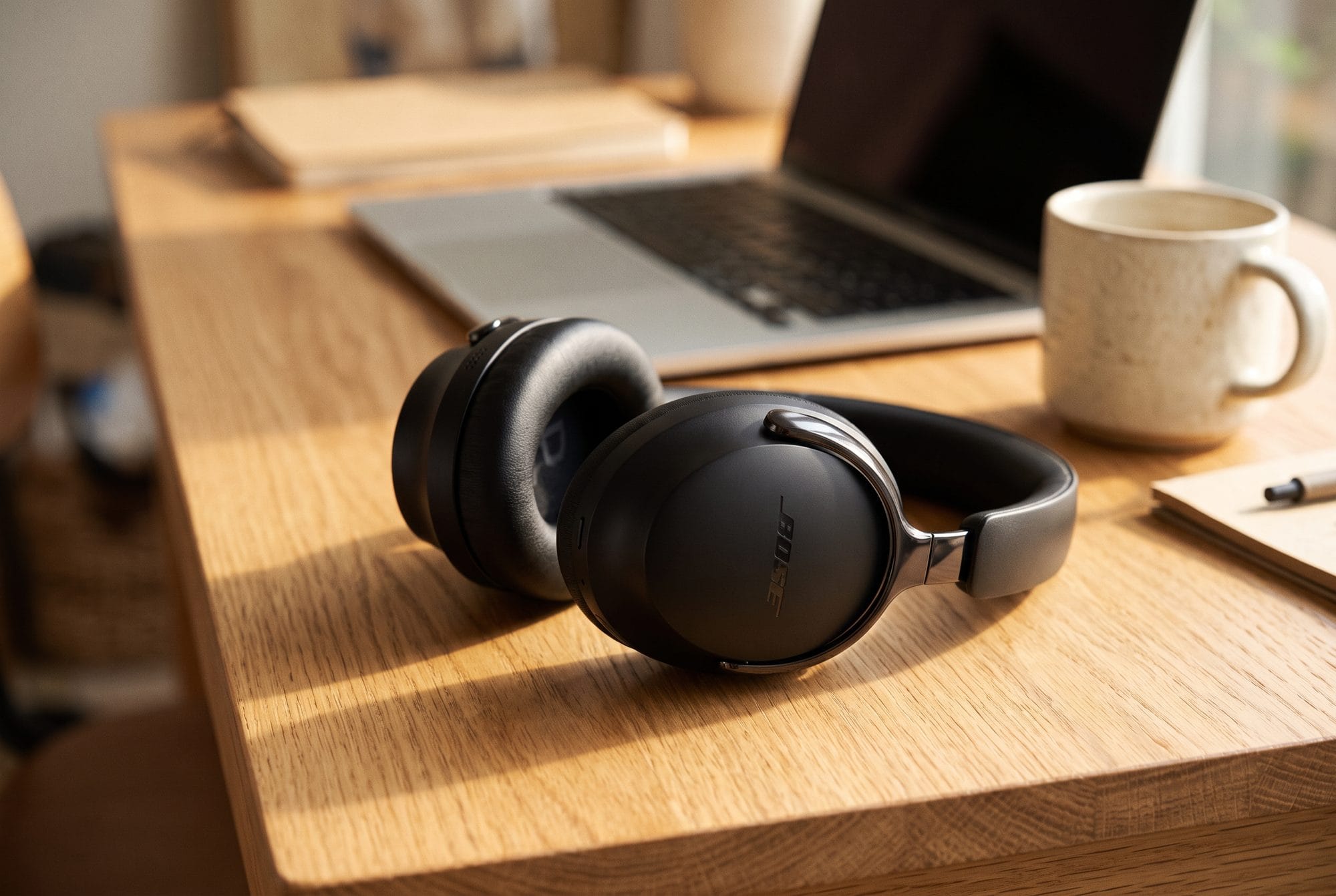
The ones I reach for when I'll be wearing headphones for hours.
Who it's for: You've abandoned headphones before because of the clamp, the weight, or the hot-ears feeling after an hour. Or you simply want to put something on and have the room get substantially calmer, without fiddling.
What I found: I've owned a pair for about a year and use them for long work sessions, travel, and anywhere I really want the background gone. The noise cancelling is the reason I keep reaching for them. On planes especially, the constant engine drone almost disappears once there's some music playing.
RTINGS rates the 2nd Gen's noise isolation as outstanding: plane-cabin rumble and busy traffic get pushed well into the background, along with air conditioning, fans and general hum. They also rank it at the very top of every pair they've measured for comfort, which is why it's here. There are three modes: Quiet, Immersion and Aware. Aware is the transparency setting for when you need the room back.
1st Gen or 2nd Gen? Decide on price. The 2nd Gen (October 2025) takes the battery from 24 hours to 30 and adds smaller refinements, but SoundGuys and RTINGS both find the noise cancelling itself similar across the two generations. If a 1st Gen is heavily discounted, it's a sensible buy for noise cancelling alone. If the gap is small, get the 2nd Gen.
The annoying bit: It's the priciest thing here. Comfort is very good, but after a few hours the ear pads get warm and slightly sticky, so I shift the cups around now and then. And the touch volume control is surprisingly easy to hit by accident when you're only adjusting the fit. Like every ANC headphone, voices and sharp sounds (a conversation at the next table, clattering dishes, a barking dog) get turned down, not deleted.
Don't buy these if: you want maximum silence per dollar; measurement puts the Sony slightly ahead on raw silence. You're paying for comfort, and that's a legitimate thing to pay for. Just know that's the trade.
Check the current price of the Bose QC Ultra (2nd Gen) on Amazon → (paid link)
Sony WH-1000XM6: the most silence, by measurement
The one to look at if raw silence is all that matters and money isn't.
Who it's for: You work somewhere with unpredictable noise, like a shared office, a house with other people in it or a café, and you need the noise gone rather than reduced.
What I found: I haven't used the XM6 myself. Everything here comes from published measurement, and I'd rather say so than pretend. Reviewers who test noise cancelling under controlled conditions, SoundGuys among them, put it ahead of the Bose for raw silence. Sony rates the battery at 30 hours with ANC on; SoundGuys measured 37 in standardised testing, so a working day is not a concern. The XM6 also brings back the folding hinge the XM5 dropped, which matters more than it sounds if you're the kind of person who throws things in a bag.
The annoying bit: It's expensive, and the controls are a touch panel on the earcup rather than buttons. If fiddly controls are a barrier to starting for you, try a pair in a shop before you buy.
Don't buy these if: your main problem is a roommate talking, not constant hum. ANC is far better at steady low-frequency noise than at voices. Scroll down to the earplugs.
Check the current price of the Sony WH-1000XM6 on Amazon → (paid link)
Soundcore Space Q45: best budget
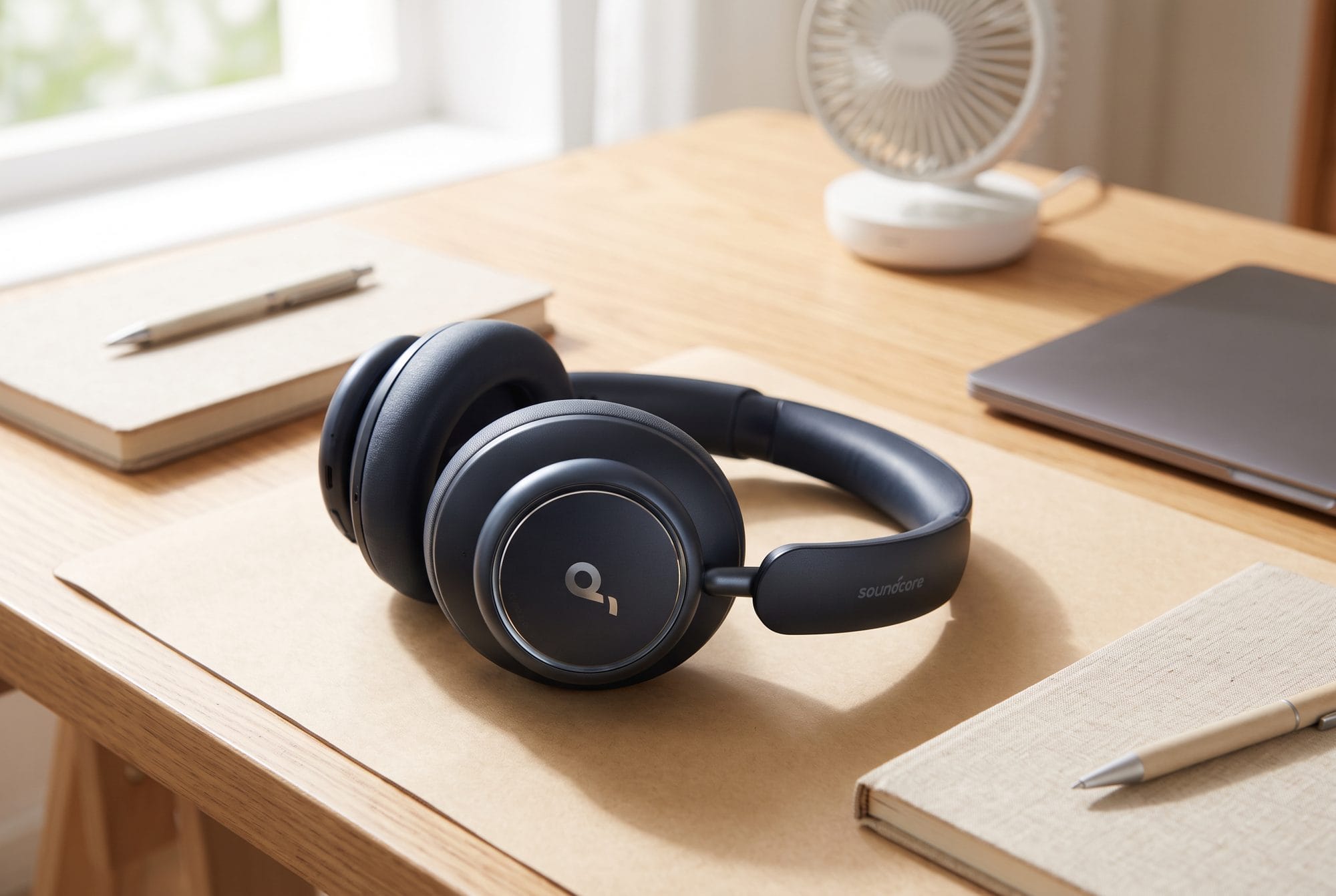
The honest answer for most people, and the one we'd suggest trying first.
Who it's for: You don't yet know whether noise cancelling helps you. That's a completely reasonable position, and an expensive thing to find out at premium prices. Or the goal is simply "make the office, train or plane quieter" without spending Bose money.
What I found: I used a friend's pair for a while: at a desk, travelling, anywhere with a constant hum like air conditioning, traffic or an aircraft engine. They're probably the best-value noise cancelling headphones I've used: they strip out a lot of that low, constant noise and made it much easier for me to concentrate.
RTINGS rates these the best budget noise cancelling headphones they've tested, and they're much closer to the Bose than the price suggests. They're strongest on low, constant noise (engines, traffic, air conditioning) and noticeably weaker on voices and keyboard clatter, so set your expectations if office chatter is the main problem. The battery is genuinely absurd: 50 hours with ANC on, 65 without. That solves the charging problem by making it almost irrelevant. Multipoint means they stay connected to your laptop and your phone at the same time.
| At a glance | |
|---|---|
| Noise reduction | Excellent on rumble, weaker on voices |
| Sound quality | Rough out of the box, fine after EQ |
| Premium feel | Clearly below the Bose |
| Value | Extremely good |
The annoying bit: The pads get warm. After a couple of hours, especially in warmer weather, I definitely noticed sweaty ears. The physical buttons never became instinctive either; I'd still find myself feeling around for the right one. There's also an audible hiss when nothing's playing, and it gets louder the higher you set the noise cancelling. One reviewer found level 4 of 5 a calmer compromise than the maximum. The stock tuning is also uneven in the treble; a few minutes in the Soundcore app's EQ fixes most of it.
Try this first. If the Q45 transforms your focus, you've learned something real for a third of the money, and you can upgrade later knowing it was worth it. If it doesn't help, you've saved a couple of hundred dollars finding out.
Check the current price of the Soundcore Space Q45 on Amazon → (paid link)
AirPods Pro 3: best for out and about
For working in places that aren't your desk.
Who it's for: Body doubling in a café, working on the train, or any setting where you need to hear someone say your name.
What we found: I haven't used these myself. Released September 2025, Apple says they roughly double the noise cancelling of the Pro 2. That's worth knowing, because plenty of pages still recommend the older pair. Transparency is the real feature for our purposes: it lets you stay aware of the room rather than sealing it off, which matters if part of your brain is tracking what's happening around you anyway. Apple rates Transparency with the Hearing Aid feature at up to 10 hours.
The annoying bit: 8 hours with ANC on, 24 with the case. That's a session tool, not an all-day one, and they're at their best with an iPhone.
Don't buy these if: your noise problem is at a desk you sit at every day. Over-ears will block more and you won't lose one down the side of the sofa.
Check the current price of the AirPods Pro 3 on Amazon → (paid link)
Right, earplugs. These are not headphones.
Let's be upfront, because plenty of listicles blur this: Loop earplugs are not headphones. No music, no battery, no ANC, no Bluetooth. They're here because they solve a problem $400 headphones are genuinely bad at.
Here's the difference in one scenario. You're in a café. It's rammed, kids are screaming two tables over, the coffee machine is going, and your best friend is telling you all about the pictures they drew this week. You don't want to block that out. You want to hear your friend. You just need the edge taken off everything else so your brain can hold onto one thread.
Noise cancelling headphones are the wrong tool for that: they're built for constant hum, not speech, and wearing big over-ears while someone talks to you is its own kind of antisocial. That gap is the entire design brief for Loop.
Which Loop? Most people buy the wrong one
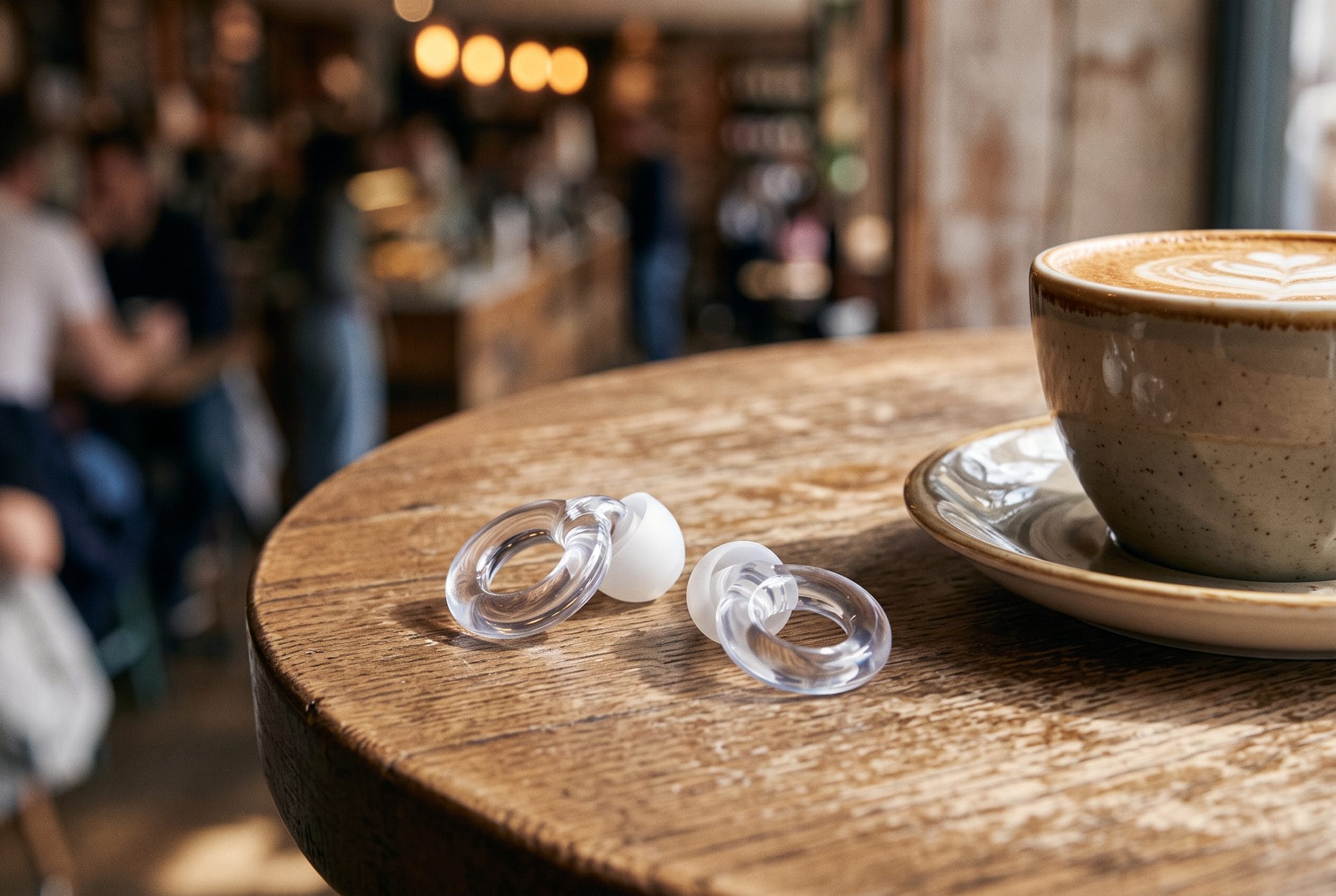
Loop Engage 2: 16 dB. The café one, and the one I use. Built to keep conversation clear while pulling the background down: restaurants, family gatherings, the office when you still need to be spoken to.
What I found: I reach for mine when I don't actually want silence. I just want everything around me turned down a little. Busy restaurants, bars, cafés, anywhere with overlapping conversations and sharp noises like glasses and cutlery. I can still hear the person talking to me, but the rest of the room feels less aggressive.
That's the real difference. They don't make a room quiet; they stop every sound in it competing for my attention at the same time. It's why they're more useful socially than ordinary earplugs. I can hold a normal conversation without taking them in and out.
Check the current price of the Loop Engage 2 on Amazon → (paid link)
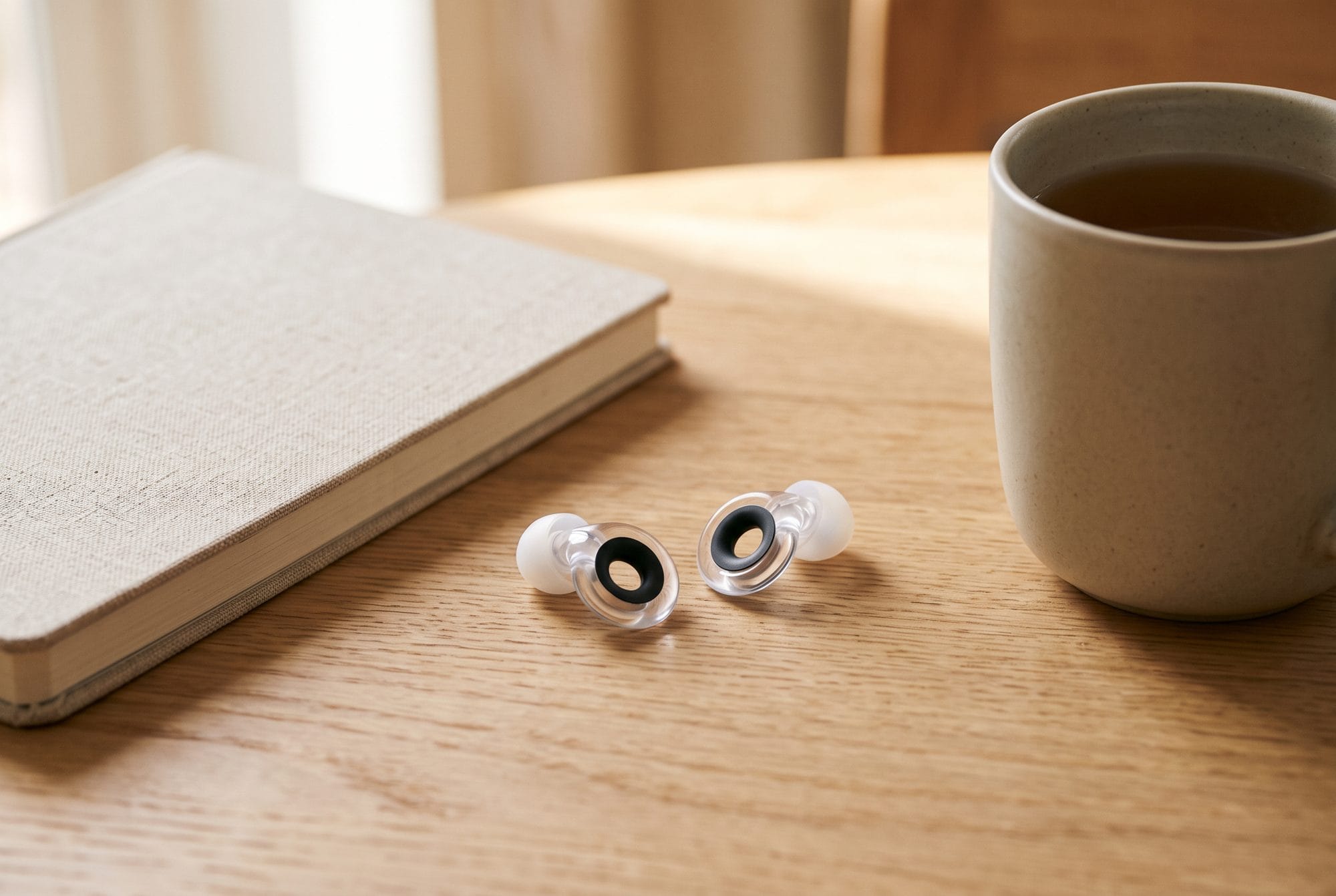
Loop Engage 2 Plus: 16 dB, or 25 dB with the Mute in. Worth the few extra dollars. The same earplug plus a removable Mute insert (+9 dB) and foam tips. Mute in, you're about level with the Quiet 2; Mute out, you're back to following a conversation. For an ADHD brain that's one thing to keep track of instead of two. You don't have to predict on Tuesday what Saturday needs.
Check the current price of the Loop Engage 2 Plus on Amazon → (paid link)
The others, from Loop's specs, because I haven't used them. Quiet 2 (24 dB) is for sleep and solo focus, not conversation; it's the one people mistakenly buy for social situations. Switch 2 (17 / 21 / 25 dB) does all the modes in one pair, including a music-fidelity setting for gigs. If you don't go to gigs, the Engage 2 Plus covers what you'll actually use.
The annoying bit: They don't play music, so if lofi is part of how you focus, they replace the wrong half of your setup. Plenty of people wear Loops when they're out and headphones at the desk. Sizing takes some trial and error, but the box includes XS, S, M and L tips (M fitted) and a keychain case.
Don't buy these if: your problem is constant mechanical hum at a desk. ANC genuinely wins there.
Before you buy: check the generation
Three of the four headphones here were replaced in late 2025. The older versions are still on sale, often heavily discounted, and several pages ranking for this term still recommend them without saying so.
| You want | Not |
|---|---|
| Sony WH-1000XM6 (paid link) | WH-1000XM5 |
| AirPods Pro 3 (paid link) | AirPods Pro 2 |
| Bose QC Ultra 2nd Gen | 1st Gen (though a heavily discounted one is fine; the noise cancelling is similar) |
Buying an older model on clearance is a sensible move, as long as you know that's what you're doing. Paying current-generation money for last year's is not.
What didn't make it
The ones I stopped using. I've tried other noise cancelling headphones and earplugs, and the ones that didn't last failed for one of two reasons: they got uncomfortable after an hour or two, or they cut noise so aggressively that having a conversation became a chore. That's why I've ended up with different tools for different situations, rather than expecting one pair to do everything.
What actually matters when you're buying these with an ADHD brain
Spec sheets won't tell you whether a pair gets used or ends up in a drawer. These will.
Comfort past hour two. Hyperfocus means losing track of time, and a pair that's fine for an hour and painful at three gets abandoned. This matters more than ANC strength. Both pairs I've worn got warm after a couple of hours, which is worth knowing if you run hot.
Charging is a task, and tasks don't get done. If you won't charge them nightly, a 50-hour battery isn't a luxury spec. It's the difference between using them and not.
Fiddly controls are friction. Anything you have to remember or feel around for is another small barrier between you and starting.
Is it noise, or is it people? ANC is excellent at constant hum and mediocre at speech. If the problem is a conversation two rooms away, a cheap pair of earplugs may beat expensive headphones.
Transparency mode matters if you can't settle with the room fully sealed off.
On spending. ADHD and impulsive buying go together, and a $400 purchase at 11pm because a website said it would fix your focus is a very ADHD thing to do. Nothing here fixes focus; it removes one obstacle. Start with the cheap option, find out whether that obstacle is actually yours, and upgrade only if it is.
Questions people ask
Does noise cancelling actually help ADHD? There's no ADHD-specific clinical evidence that it does. Reducing unpredictable background noise removes one common source of distraction, and it's among the most commonly recommended tools for adults with ADHD. But whether it helps you is individual, which is why starting cheap makes sense.
Headphones or earplugs? Headphones for constant hum (traffic, fans, air conditioning), or when you want music while you work. Earplugs for people noise, and when you still need to hear someone; in a loud room, that's Loop Engage 2, not Loop Quiet. Plenty of people own both.
Is it worth spending $400 on headphones? Only once you know noise reduction helps you. Try a budget pair first. If it changes how you work, the upgrade is easy to justify. If it doesn't, you've saved a lot of money.
Do they help with hyperfocus? They may help you get into focus by lowering the distraction floor. Nothing here manufactures hyperfocus. Be a bit wary of anything marketed as though it can.
Can I wear them all day? Physically, with a comfortable pair, yes. But sealing yourself off for eight hours has its own costs. Some people find it increases the disconnection they were already struggling with. Breaks still matter.
Related reading
- Why Lofi Music Helps ADHD Focus
- Brown Noise for ADHD
- Brown Noise vs Lofi for ADHD
- What is Body Doubling for ADHD?