ADHD Laundry System That Finally Ends the Clean Clothes Chair
Hate folding? This no-fold ADHD laundry system uses open bins so clean clothes skip the chair. Set it up in 20 minutes, then test it for two weeks.
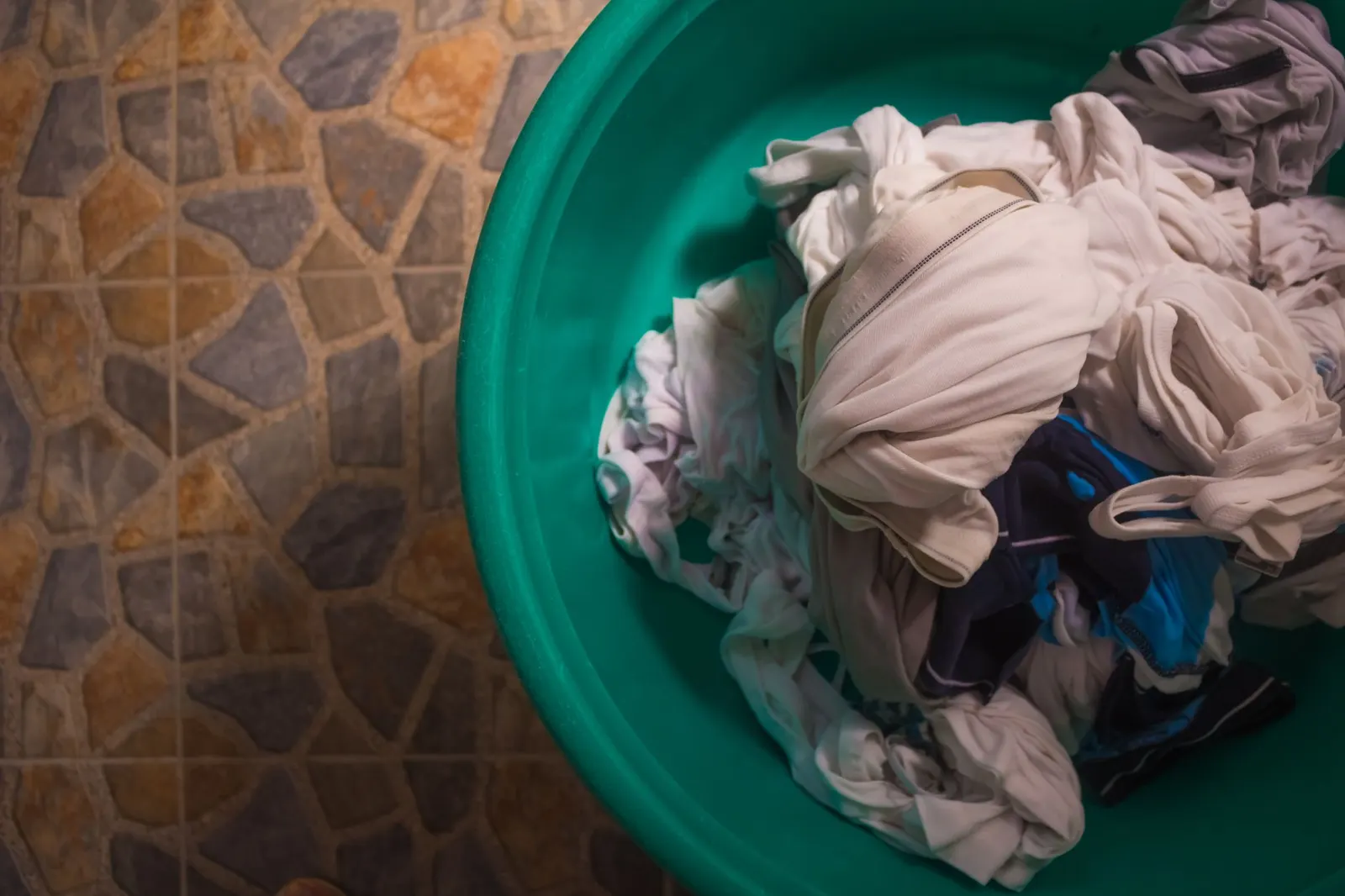
You have a chair in your room that nobody has sat in since roughly spring. It isn’t really a chair anymore. It’s a soft, lumpy mountain of clean clothes, and you get dressed by digging through it like it’s a bargain bin.
If you searched for an ADHD laundry system, here’s the plain answer: stop folding. Clean clothes go straight from the dryer into a few open bins sorted by type, and you get dressed directly out of those bins.
No folding, no drawers, no lids. That’s the whole system.
The rest of this post covers why it fits our brains, how to set it up in about 20 minutes, and how to test it without it becoming another abandoned project.
The quick version
- Folding is the step where laundry dies, so cut it.
- Use 4 to 6 open bins, one per category. Baskets, boxes, whatever you already own.
- Put the bins where you actually get dressed.
- Add one bin for worn but not dirty clothes. That’s half of what lives on the chair.
- Hang only the stuff that truly needs it.
- Test it for two weeks before you judge it.
Your Clean Clothes Chair Is Secretly a Waiting Room
Let’s be fair to the chair for a second. It’s doing a job. It holds clean clothes where you can see them and grab them, which is more than your dresser has managed in months.
Picture it as a waiting room. Every shirt on that chair is sitting in a plastic seat, holding a little paper ticket with a number on it, waiting to be called into a dresser drawer.
Nobody ever calls the number.
Some of those socks have been waiting so long they’ve read every magazine twice. The bin system doesn’t fix this by finally calling everyone in. It shuts the waiting room down so the clothes go straight home.
If you’ve spent any time in ADHD threads on Reddit, you know the clean clothes chair is basically a shared language. A lot of us have one. A lot of us have also tried to fix it with one heroic Sunday fold that lasted exactly one Sunday.
So no, you aren’t uniquely messy or lazy. You built a workaround because the official system was never designed for your brain.
Why Folding Is Where Laundry Goes to Die
Laundry looks like one chore. It’s actually about six: gather, wash, move to the dryer, dry, fold, put away. Every handoff is a fresh chance for your attention to wander off and never come back.
Washing and drying come with built-in urgency. There’s a beep, and there’s the threat of that damp, sour smell. Folding has nothing: no beep, no deadline, no consequence for at least a week.
That’s exactly the kind of task an interest-driven brain skips. It’s the same finish-line problem behind why dishes are so hard to start. The boring, invisible last step is the one that never happens.
Every fold is a tiny decision
Folding also sneaks in a pile of micro decisions. Which way does this fold? Top drawer or second drawer? Is this a pajama shirt now, or still a going-out shirt?
Forty items means forty little choices. If you’ve read about decision fatigue, you know how fast that tank empties. A no-fold system shrinks it to one question per item: which bin?

Build the No-Fold Bin System in About 20 Minutes
You don’t need to buy anything. Laundry baskets, cardboard boxes, a crate, or a drawer you’ve stopped pretending to organize all count as bins.
Using baskets is the classic ADHD laundry basket system, and it works. A row of baskets on the floor is just a dresser with the drawers already open.
The steps
- Pick 4 to 6 categories, max. Something like tops, bottoms, underwear and socks, sleep and lounge, gym clothes. More than six and you’re back to making decisions. If you only wear three kinds of clothes, three bins is a perfect system.
- Put the bins where you get dressed. Not where they look nice, and not where a magazine says they should go. If you get dressed next to the bed, the bins live next to the bed.
- Go from dryer to bins in one trip. Carry the whole load straight to the bins and toss each item into its spot. Don’t sort into piles on the bed first, because the bed is just the chair’s cousin.
- Hang only what truly needs it. Work shirts, the one nice dress, anything that comes out looking like a crumpled receipt. Hanging takes a few seconds per item, while folding takes longer and gets undone the moment you dig.
- Keep the dirty hamper where clothes come off. If you undress in the bathroom, the hamper lives in the bathroom. Every extra step between you and the hamper is a step your clothes won’t take.
- Add the in-between bin. This one gets its own section, because almost every laundry guide skips it.
The third bin nobody talks about
Here’s what most systems miss. The chair isn’t only clean clothes. A big chunk of it is jeans you wore for four hours, the hoodie you threw on for one errand, the shirt that’s fine but not fresh.
Those clothes don’t belong in the hamper. They definitely don’t belong back with the clean stuff. Any system with only “clean” and “dirty” is quietly forcing them onto the chair.
So give them a home: one bin or one hook for worn but fine. Call it whatever makes you laugh. The moment it exists, the chair loses its biggest supplier.
How to Test It Without Making It Your Whole Personality
Our brains love a new system for about four days. Then the shine wears off and it joins the planner graveyard. So treat this as a two-week experiment, not a life overhaul.
Your only rules for those two weeks:
- Don’t fold anything, even if you feel weirdly inspired at midnight.
- Get dressed from the bins, not the chair.
- Notice which bin overflows first.
That overflowing bin is information, not failure. It usually means you own more of that category than you wear, or the bin is too small. Adjust the bin, not your character.
Missed a few days? That isn’t proof the system failed. That’s all or nothing thinking trying to talk you into quitting. A system that works most days beats a perfect one you abandon.
And celebrate loudly when it works. You pulled socks from the sock bin on a random Tuesday without thinking about it? That’s a real win. Say it out loud to the empty room.
When the Chair Comes Back (Because It Probably Will)
Some weeks will be rough. A busy stretch, a low-energy month, a burnout dip, and the chair quietly starts filling up again. You didn’t break anything.
The reset is small: carry the chair’s contents to the bins and do a ten minute sort. Clean goes in its bin. Worn but fine goes in its bin. Anything that fails the sniff test goes in the hamper.
Done counts even if the bins look chaotic. Chaotic bins still beat a chair, because you can find the jeans.
If ten minutes alone feels impossible, don’t do it alone. Body doubling works on laundry the same way it works on email. Someone else’s quiet presence, even on a screen, makes starting weirdly easier.
Some of us also borrow a beat. Put on a mix from our own Lofi Cutie on YouTube, give the sort one or two tracks, and let yourself stop when the music does.
Quick questions
Won’t my clothes look wrinkled straight out of a bin?
Everyday stuff like t-shirts, jeans, leggings and hoodies tends to look about the same out of a bin as out of a drawer. Crisp woven fabrics are the main wrinkle risk, which is why those get hung. If something comes out rough, a few minutes back in the dryer with a damp washcloth often relaxes it.
What if I share a home with someone who folds?
Your bins can be your zone without converting anyone. Frame it as a tool your brain uses, not a judgment on how they do things. If it turns into tension, it helps to know how to explain ADHD to your partner without it becoming a fight.
My real problem is forgetting the wet load in the washer. Does this help?
Bins fix the end of laundry, not the middle. Start a load only when you’ll be home for the whole cycle, and set a phone timer for the cycle length the second you press start. Some of us leave the empty basket in front of the bedroom door as a reminder we literally have to step over.
Is a no-fold system just giving up on being an adult?
No. Being an adult means having clean clothes and wearing them, and this system does both. Folding is a style choice that got sold to us as a moral one.
If you want company for your first bin sort, bring your chair pile to one of our own focus rooms and join the next focus room. The Nest is brand new and still gathering its first 50 founding members, and nobody in there will ask whether you folded anything.

Get the free Unstuck Kit
Six cards for the moments ADHD freezes you, three Lofi Cutie tracks that keep time for you, and an invite to our focus rooms. Plus a short weekly letter. No spam, no guilt trips, one click to unsubscribe.
- 6 unstick cards
- 3 start tracks
- Focus rooms invite
We'll email you a link to confirm. Read how we handle your email in the privacy policy.