ADHD Lost Sense of Self? You're Not Broken, You're Rebuilding
Post-diagnosis identity crisis is real. If you feel like you don't know who you are anymore after your ADHD diagnosis, you're not alone. Let's talk about it.
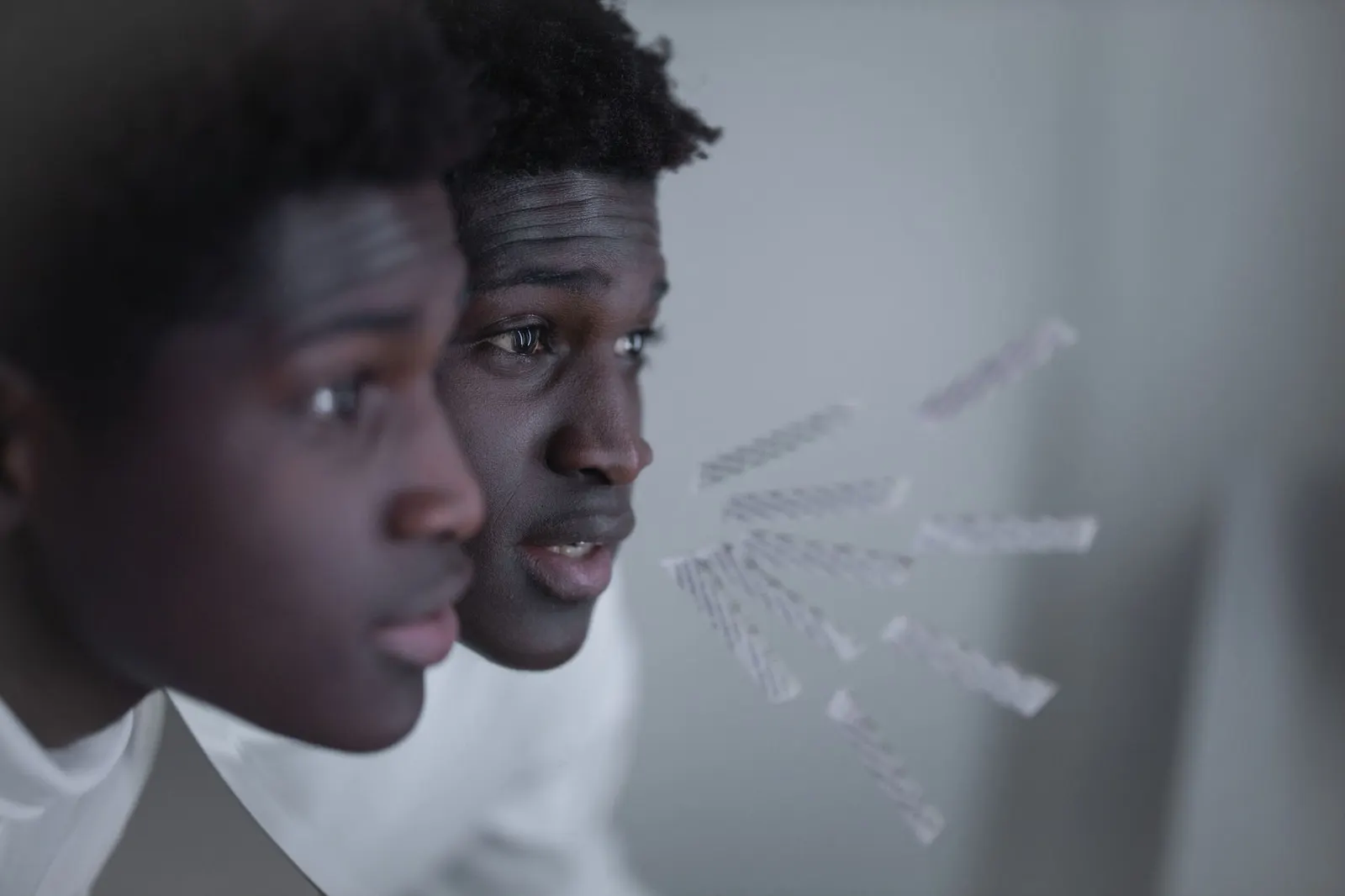
Someone asks what you’re into, what you want, who you even are, and your brain hands back a blank page.
If you feel like you have no sense of self and you have ADHD, you’re not broken and you’re not empty. This is really common, especially after a late diagnosis, and a lot of us felt it long before we had a name for it. Usually the “you” is still in there. It’s just buried under years of masking, people-pleasing and shape-shifting to fit whoever was in the room. On top of that, your interests rotate so fast it’s hard to point at one and say “that’s me.”
So losing your sense of self isn’t the end of you. It’s the start of rebuilding.
Maybe it hit right after you got diagnosed. Finally, the thing you’d been wondering about for years had a name.
And somehow, instead of feeling relieved, you feel.. lost.
Like someone just told you the person you thought you were never actually existed. That every personality trait, every quirk, every strength and struggle was just ADHD wearing a trench coat pretending to be you. You look in the mirror and think, “Wait. Who am I without the ADHD? Or worse.. who was I before I knew?”

If you’re spiraling right now, trying to figure out where “you” ends and “ADHD” begins, I need you to know something.
You didn’t lose yourself. You’re just meeting yourself for the first time without the mask on.
And yeah, that’s disorienting as hell.
Why You Feel Like You Have No Sense of Self
Feeling like there’s no “you” in there is one of the loneliest feelings there is. Especially when everyone else seems to know their favorite color, their five-year plan and their exact coffee order.
Here’s what tends to be going on for a lot of us.
You became a chameleon. If you spent years getting corrected for being too loud, too much or too distracted, you learned to read the room and become whatever it needed. You got so good at matching other people that your own preferences went quiet.
Your interests come in waves. You go all in on sourdough, then bouldering, then a 40-episode anime, then nothing. When your passions rotate like that, it’s hard to point at one and call it your identity. (If that sounds familiar, here’s how hyperfocus works.)
Rejection taught you to edit yourself. If criticism stings for days, you start trimming your opinions before you say them out loud. Do that for 20 years and you forget what the unedited version even sounded like. Rejection sensitivity is a big piece of this for a lot of us.
Other people wrote your description for you. “Lazy.” “Scatterbrained.” “So much potential.” When the labels always come from outside, you never get to build your own.
None of this means you’re empty. It means your sense of self got buried, not deleted.
One honest note. If the emptiness feels constant and heavy, or you feel numb, or like you’re watching your life from outside your body, that’s worth raising with a clinician. Feeling lost can overlap with other things, and you deserve someone who can help you sort it out properly.
Why ADHD Diagnosis Feels Like an Identity Crisis
Here’s what nobody tells you about getting diagnosed as an adult. Sociologists have a name for what happens when a diagnosis makes you rethink your whole life: “biographical disruption.” And a late ADHD diagnosis can shake up your entire self-concept in exactly that way. Basically, your brain has to go back and rewrite your entire life story with new information.
That time you got called lazy in school? ADHD. That job you quit because you “just weren’t motivated enough”? ADHD. The friendships that fizzled because you forgot to text back for three months? Also ADHD.
Suddenly, every memory you have is up for review. And the person you thought you were.. might have just been survival mode with good PR.
You spent years building an identity around compensating. Around trying harder. Around believing you were just fundamentally more difficult than everyone else. And now someone’s telling you that none of that was your fault?
That’s not just a diagnosis. That’s a plot twist that rewrites the entire first act.

If you want something on in the background while you read this, try Lofi Cutie’s Deep Focus playlist. It’s for sitting with the uncomfortable questions instead of running from them. Sometimes you need music that doesn’t try to cheer you up. You just need it to sit next to you while you figure things out.
The Three Phases of Post-Diagnosis Identity (You’re Probably in One Right Now)
Most of us cycle through these in some order. There’s no timeline. There’s no “right way” to do this.
Phase 1: The Grief Hits
This is where you mourn the person you could’ve been. The grades you could’ve gotten. The friendships you could’ve kept. The version of yourself that didn’t have to fight their own brain every single day.
It’s okay to be angry. It’s okay to feel robbed. You were robbed. Of accommodations, of understanding, of a childhood that didn’t feel like drowning.
Sit with it. Write angry letters you’ll never send. Blast music that matches the feeling. There’s a whole playlist for this exact mood on the channel, because sometimes you need something that understands the weight.
Phase 2: The Rewrite
This is where you go back through your memories and recontextualize everything. That “lazy” label your teacher gave you in third grade? That was a symptom, not a character flaw.
You weren’t broken. You were unsupported.
This phase is exhausting because it’s like watching your life story with director’s commentary. Every scene gets a new explanation. Some of them are relieving. Some of them hurt worse.
Phase 3: The Slow Rebuild
This is where you start testing who you are now. Without the masks. Without performing “normal” 24/7.
Maybe you’re quieter than you thought. Or louder. Maybe you actually hate small talk and that’s not a personality defect. Maybe you need more alone time than everyone else and that’s just.. how your brain recharges.
You start making choices based on what actually works for you, not what you think you’re supposed to want.
This phase doesn’t have an end date. You’re not trying to “find yourself” like some kind of spiritual scavenger hunt. You’re learning yourself. There’s a difference.
The Masking Spiral: When You Forget What’s Real
Most of us spent decades masking before we even knew what masking was. We learned to mirror other people’s energy, fake focus in meetings, laugh at the right time, pretend we weren’t drowning.
And here’s the cruel part. You got so good at it that you started believing your own performance.
You convinced yourself that the “easy-going” version of you was real. That the version who never asked for help was just independent. That the hyper-responsible people-pleaser who said yes to everything wasn’t compensating for a brain that felt like it was failing at being human.
Now that you know about the ADHD, all that masking looks different. It wasn’t strength. It was survival. And the person you thought you were? That might have just been the role you played to avoid being found out.
If you’re realizing how much of your personality was just masking and losing yourself, you’re not alone. That’s one of the hardest parts of late diagnosis. Figuring out what’s authentically you and what was just.. damage control.
The “Wait, What Do I Actually Like?” Crisis
This part gets weird.
Post-diagnosis, you might find yourself questioning literally everything. Your hobbies. Your career. Your taste in music. Even the people you hang out with.
Because once you start peeling back the layers of compensation and masking, you realize you don’t actually know what you like. You just know what you were good at, or what other people expected, or what you hyperfixated on for three weeks in 2019 before it lost all meaning.
This crisis comes up constantly when we talk about late diagnosis. Maybe you realize you’ve been in a career for eight years because you’re good at it, not because you want it. Maybe you figure out you don’t actually like going out every weekend. You just said yes because saying no felt like admitting you were broken.
You might catch yourself thinking, “Do I even like this? Or did I just convince myself I did because it made me look normal?”
And that’s terrifying. Because if you strip away all the stuff you did to survive, what’s left?
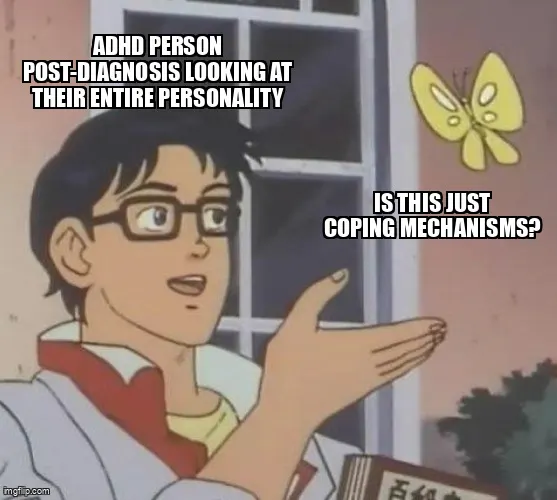
Here’s the truth. What’s left is you. The real version. The one who’s been under there the whole time, just waiting for permission to exist without apologizing.
The Science of Rebuilding Your Self-Concept
Let’s talk about what’s actually happening in your brain right now.
Your sense of self isn’t a fixed thing you either have or don’t have. Psychologists generally describe it as something that keeps getting updated as you learn new things about yourself. If you want to nerd out, there’s a whole field of identity development research on how this works.
When you get a late ADHD diagnosis, you’re suddenly holding two conflicting stories. The old one (I’m just bad at life) and the new one (I have a neurodevelopmental condition that nobody caught).
Making those two stories fit together takes time. Some people call it identity reconstruction.
You’re not broken for feeling lost right now. You’re in the middle of a rewrite. Taking in new information and updating your sense of who you are is exactly the job your brain is doing.
The disorientation you’re feeling? That’s not a bug. It’s a feature of healing.
But it doesn’t make it easier. I know that.
Is ADHD Your Identity, or Just Something You Have?
Once the dust settles, a lot of us hit the next question. Is ADHD part of who I am? Or is it just a thing I have, like a bad knee?
There’s no right answer. Some of us say “I’m an ADHDer” and feel proud and seen. Some of us say “I have ADHD” because it doesn’t feel like the whole story. Both are allowed, and you can switch depending on the day.
Here’s how I think about it. ADHD shapes how you move through the world. Your pace, what grabs your attention, how much boredom hurts, how big your feelings get. But it doesn’t write your values. It didn’t pick your weird sense of humor, the people you’d drop everything for, or the songs that make you cry in the car.
Remember that fear from the start, that your whole personality is just ADHD in a trench coat? Flip it around. ADHD is the coat. It changes how you look walking down the street, how you move, what snags on the pockets. It’s not the person wearing it.
If you want to untangle it, try sorting a few traits into three piles:
- ADHD shaped this. (“I talk fast when I’m excited.”)
- Masking built this. (“I always say yes to plans.”)
- This is just me. (“I love rainy days and horror movies.”)
Plenty of traits will land in two piles at once. That’s normal. The point isn’t a perfect sort. It’s noticing that the third pile exists at all.
The Weird Grief Nobody Talks About
There’s this grief that comes with ADHD diagnosis that’s hard to explain to people who haven’t been through it.
You’re relieved. Finally, an explanation. But you’re also mourning.
You’re mourning the version of yourself who tried so hard. The one who believed that if they just worked harder, tried harder, cared more, everything would click into place. The one who thought they were broken instead of unsupported.
You’re mourning the life you might have had if someone had noticed sooner. The friendships that faded. The opportunities you didn’t take because you didn’t trust yourself. The years you spent believing you were the problem.
And here’s the part that makes it even messier. You’re also mourning the identity you built around being “the person who struggles but pushes through anyway.” Because if ADHD explains the struggle, what happens to the hero story you told yourself to survive it?
It’s okay to grieve all of it. The relief and the grief can exist at the same time. You don’t have to choose.
The Anger Is Valid Too
You’re allowed to be furious.
Furious at the teachers who punished you for daydreaming. Furious at the doctors who said “you can’t have ADHD, you got good grades.” Furious at a system that tends to notice the kids who are disruptive instead of the kids who are quietly drowning.
Furious at yourself, sometimes, for not figuring it out sooner. (Even though that’s not fair. You didn’t know what you didn’t know.)
The anger is protective. It’s your brain finally saying “that wasn’t okay.” Let it burn for a while. Don’t rush to forgiveness or “acceptance” or “moving forward” before you’ve let yourself be MAD.
A lot of us go through a stretch, sometimes months, of being irrationally angry at small things. That makes sense. The anger was there the whole time. You just finally have permission to feel it.
What Helps When You Don’t Know Who You Are Anymore
I’m not going to tell you this gets solved overnight. It doesn’t. But here’s what tends to help a lot of us who’ve been through this.
1. Give yourself permission to mourn. You lost something real. Even if what you lost was a version of yourself that was built on shame and exhaustion, it was still yours. You’re allowed to grieve it.
2. Stop trying to figure it all out at once. You don’t need to know who you are by next Tuesday. Start smaller. What do you like right now, today, in this moment? Not what you think you should like. What actually feels good?
3. Experiment without commitment. Try things with zero pressure. Join a Discord server. Watch a weird movie. Take a walk without your phone. See what sticks. You’re not looking for your new identity. You’re just collecting data. If starting is the hardest part, try the new thing during a body doubling session so you’re not doing it alone.
4. Talk to people who get it. This is one of those things you can’t process alone. Finding your people makes the whole thing feel less like you’re unraveling and more like you’re just.. becoming.
That’s a big part of why The ADHD Nest exists. We’re new and looking for our first 50 founding members, and people sitting in the middle of this exact identity crisis are who we’re building it for. Sometimes it helps just to say it out loud: “I don’t know who I am anymore.” And have someone reply, “Yeah. Me neither. But we’re figuring it out.” join.adhdnest.org

5. Keep a “this is me” list. Every time you notice something that feels true, write it down. Not something you think you should be. Just something that feels real. “I like rainy mornings.” “I feel calm when I’m organizing things.” “I hate small talk but I love deep 2 a.m. conversations.” Over time, that list becomes a map.
6. Let yourself be inconsistent. You don’t have to be the same person every day. ADHD brains shift. Our interests rotate. Our energy changes. That’s not a flaw in your personality. That’s just how you’re wired. Stop trying to force yourself into a stable, consistent identity if that’s not how your brain works.
The Part Nobody Talks About: What If I Don’t Like Who I Actually Am?
Okay. Real talk.
What if you peel back all the masking, all the coping, all the trying to be someone else.. and you don’t like what you find?
What if the “real you” is messy, inconsistent, sensitive, too much, or not enough?
First. You’re not going to be everyone’s cup of tea. Nobody is. But you can be someone’s entire vibe. The right people tend to love the real version of you way more than they ever loved the performance.
Second. The version of you that’s emerging right now isn’t finished. You’re not uncovering a fixed, static self. You’re building one. And you get to choose what that looks like.
You don’t have to love every part of your ADHD brain. You don’t have to celebrate every struggle or reframe every hard thing as a gift. But you do get to decide what you keep, what you work on, and what you make peace with.
This is where agency comes back. You lost your sense of self because you realized a lot of it was built on things outside your control. But rebuilding? That part is yours.
When the Identity Crisis Loops Back Around
Some of you are reading this thinking, “Okay, but I already went through this. Why am I back here again?”
Because brains don’t process big stuff in one neat pass. You’ll think you’ve integrated the diagnosis, and then something will trigger a new layer of grief.
Maybe it’s seeing a kid get accommodations you never had. Maybe it’s realizing why masking made everything harder and feeling the weight of all those years. Maybe it’s just.. a random Tuesday where everything feels fake again.
You’re not regressing. You’re spiraling up, not down. Each time you revisit this, you’re processing it from a stronger place.
Be patient with yourself. You’re doing something most people never have to do: rebuilding your self-concept as an adult with new information.
That’s hard. That’s supposed to be hard.
Loss of Self Identity Doesn’t Only Happen After Diagnosis
Not everyone reading this just got diagnosed. Maybe you’ve known for years, and you still feel like you’ve lost yourself.
That happens too. A lot of us lose our sense of self during ADHD burnout, when every ounce of energy goes into keeping the basics running. There’s nothing left for the stuff that made you feel like you. No hobbies, no curiosity, no opinions about dinner. Just getting through.
It can also happen after a big change. A breakup, a move, a new job, becoming a parent. If your sense of self was propped up by routines and other people’s expectations, losing those can make everything wobble.
The rebuild works the same way, just slower when you’re running on empty. Rest first. Then start tiny. One song you actually like. One food that sounds good. Five minutes on something you used to love, with zero pressure for it to spark anything.
Your self didn’t leave. It’s been waiting for you to have a little energy again.
You’re Not Lost. You’re Just Not Pretending Anymore
I know it feels like you’ve lost yourself. Like the person you were is gone and you have no idea who’s left.
But here’s what I really think is happening.
You didn’t lose yourself. You lost the version of you that was trying to survive in a world that wasn’t built for your brain. The version that was working three times as hard as everyone else just to look normal. The version that believed all the gaslighting and internalized all the shame.
That version is gone. And yeah, that’s sad. Because she (or he, or they) did the best they could with what they had.
But the person who’s emerging now? The one who’s finally allowed to stop pretending? That’s the real you. The one who was under there the whole time. The one inside the coat.
You’re not broken. You’re not lost. You’re just meeting yourself for the first time without the survival mode filter on.
And I know that’s scary. I know it’s disorienting. But I also think it’s the beginning of something better.

Quick questions
Is it normal to feel like you have no sense of self with ADHD?
Yes. It’s really common, especially if you were diagnosed late or masked for a long time. It usually means your preferences got buried under survival strategies, not that there’s nothing there. If it feels constant, heavy or numb, bring it up with a clinician.
Does ADHD change your personality?
ADHD doesn’t swap out who you are. It shapes how you experience things like attention, energy, boredom and big feelings. A lot of what feels like a “personality change” after diagnosis is really you dropping masks you didn’t know you were wearing.
How long does the identity crisis after diagnosis last?
There’s no set timeline, and anyone who promises one is guessing. For a lot of us it comes in waves. It goes quiet, then a new realization brings it back. Each round tends to feel a little less like falling and a little more like learning.
The Bottom Line
If you’re in the middle of a post-diagnosis identity crisis, feeling like you don’t know who you are anymore, you’re not alone. You’re not broken. And you’re not failing at healing.
You’re doing something incredibly brave. You’re letting go of a version of yourself that kept you safe, even though it hurt. And you’re building something new. Something real. Something that’s actually yours.
It’s okay if you don’t have it figured out yet. Most of us don’t. But we’re figuring it out together.
Come hang out with us in The ADHD Nest. We’re brand new and looking for our first 50 founding members, and if you’re navigating this exact thing, you belong there. Sometimes the best thing you can do is just show up and say, “I have no idea who I am right now,” and let someone say, “Same. But we’ll figure it out.” It’s free. No pressure. Just people who get it. join.adhdnest.org
Your Turn
What part of yourself are you re-examining since your diagnosis? I’d love to hear. Sometimes naming it helps us figure out who we’re becoming.

Get the free Unstuck Kit
Seven cards for the moments ADHD freezes you, three Lofi Cutie tracks that keep time for you, and an invite to our focus rooms. Plus a short weekly letter. No spam, no guilt trips, one click to unsubscribe.
- 7 unstick cards
- 3 start tracks
- Focus rooms invite
We'll email you a link to confirm. Read how we handle your email in the privacy policy.